
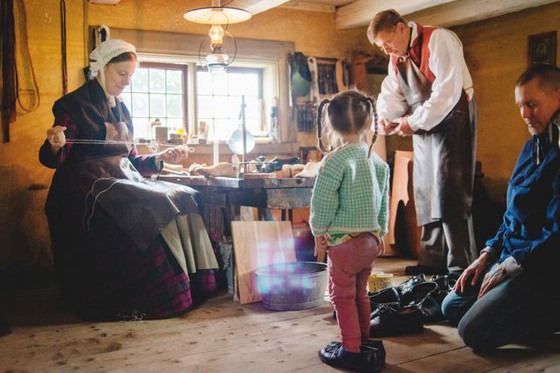
The Shoemaker’s Workshop
The Shoemaker’s Workshop recreates a home and workplace from the 1870s. In the small room, shoes were made by hand while the family lived there.
-

Get up close at Skansen!
Step inside a combined workshop and home from the 1870s. Meet trained shoemakers who demonstrate how shoes are made entirely by hand – with traditional tools.
-
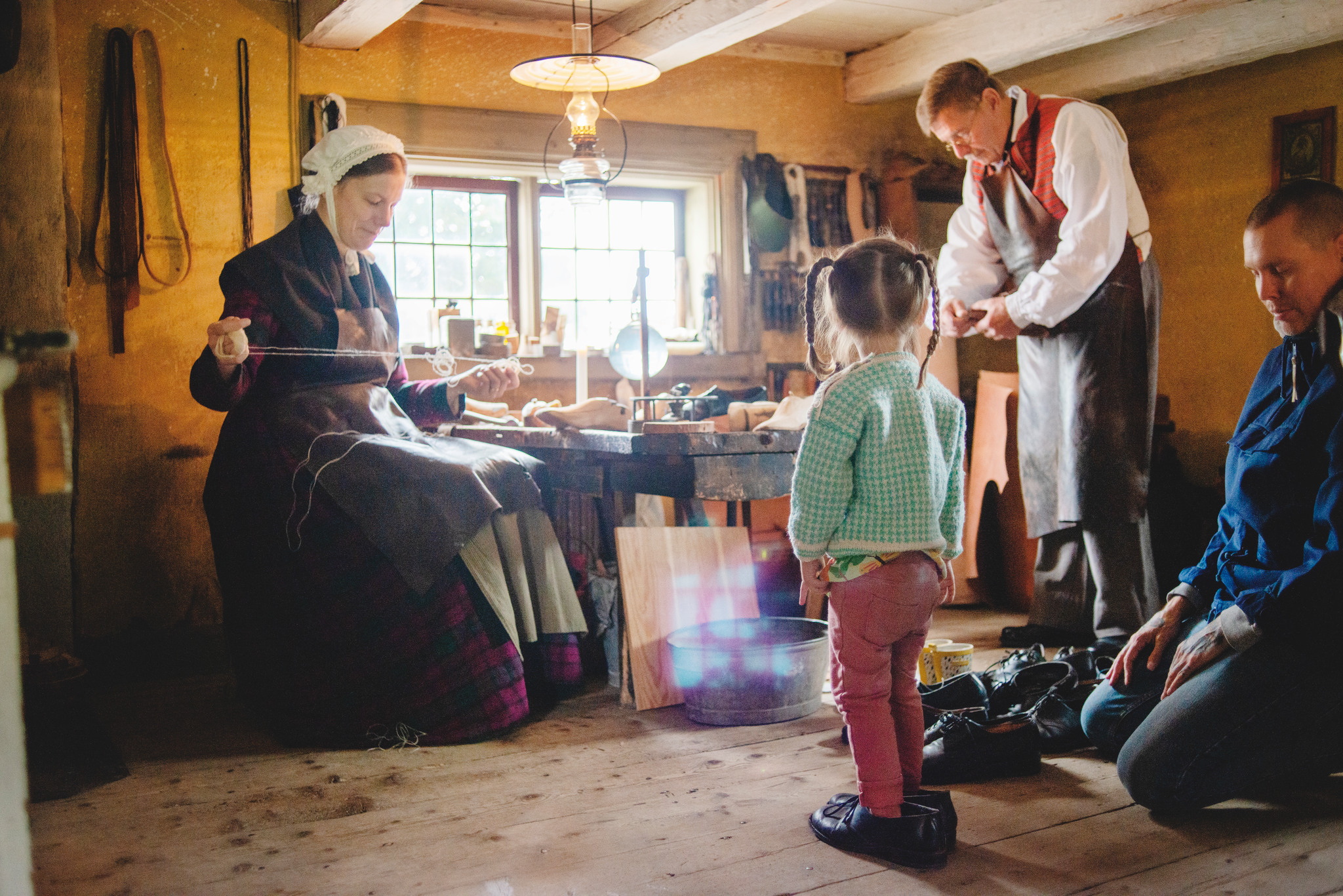
Meet trained shoe makers who talk about the profession and show how a pair of shoes could be made by hand
-

Did you know…
In the 19th century, shoes were the same whether they were for the left or right foot.
-

Accessibility
A step and high thresholds mean that access to the Shoemaker’s Workshop is limited.
| Day | Time |
|---|---|
| 30 May 2026 | 11.00-17.00 |
| 31 May 2026 | 11.00-17.00 |
| 12 September 2026 | 11.00-17.00 |
| 13 September 2026 | 11.00-17.00 |
| 17 October 2026 | 11.00-16.00 |
| 18 October 2026 | 11.00-16.00 |
| 5 December 2026 | 10.00-16.00 |
| 6 December 2026 | 10.00-16.00 |