
In the depths
At depths of around 30 metres, cod can be found swimming. Salmon and sea trout also live here, along with flatfish that hide in the sand. On the seabed, there is also a shipwreck that shows traces of human activity.
-
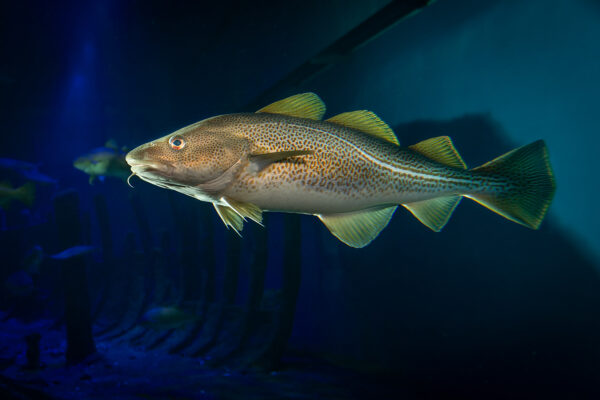
Cod (Gadus morhua)
The cod is a large predatory fish that lives in deeper parts of the Baltic Sea. It can grow over 1 metre long and live up to 25 years. It feeds mainly on other fish and bottom-dwelling animals and is today threatened by overfishing, pollution and eutrophication.
-
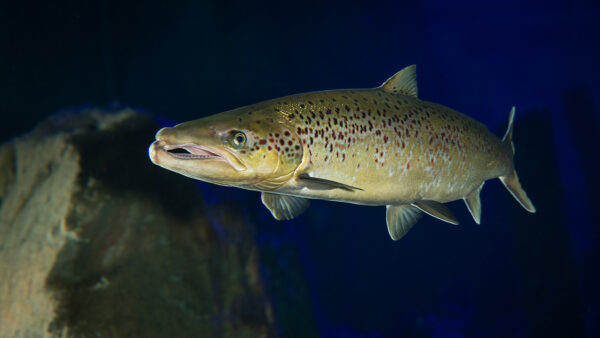
Salmon (Salmo salar)
The salmon is a well-known fish that migrates between rivers and the sea. It is born in freshwater, moves out to the sea to grow, and later returns to rivers to spawn. It can grow over 1 metre long and live up to 15 years.
-
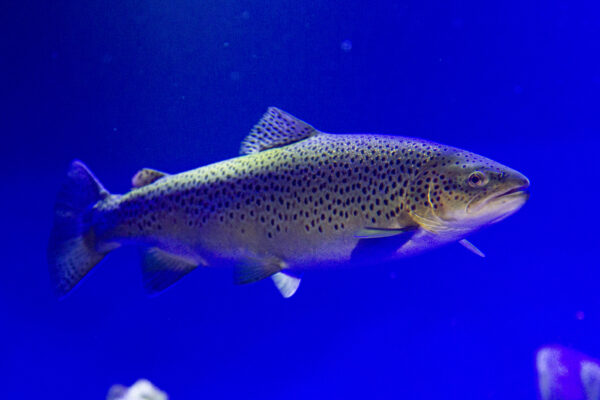
Sea trout (Salmo trutta)
The sea trout is closely related to salmon and migrates between the Baltic Sea and freshwater to spawn. Young fish grow up in rivers before moving out to sea. It can grow over 1 metre long and live up to 20 years.
-
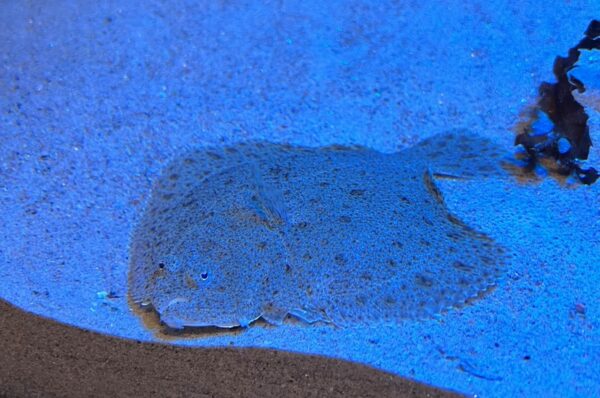
Turbot (Scophthalmus maximus)
The turbot is the largest flatfish in the Baltic Sea. As it grows, one eye moves to the other side of the body, allowing it to live flat on the seabed. It often buries itself in the sand and feeds on small animals and fish. It can grow up to 1 metre long and live up to 25 years.
-
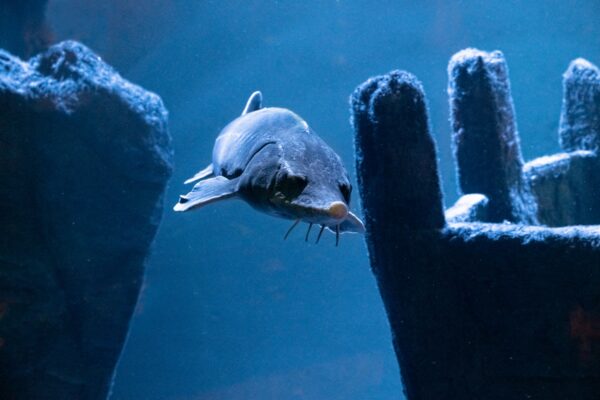
Sturgeon (Acipenser spp.)
Sturgeons are large, ancient fish that have existed for millions of years. They can grow several metres long and live for more than 50 years. They feed on bottom-dwelling animals and migrate between the sea and rivers to spawn.