We use cookies to improve, measure and analyze the use of the website as well as for visitor statistics and marketing.

Cylinder aquariums

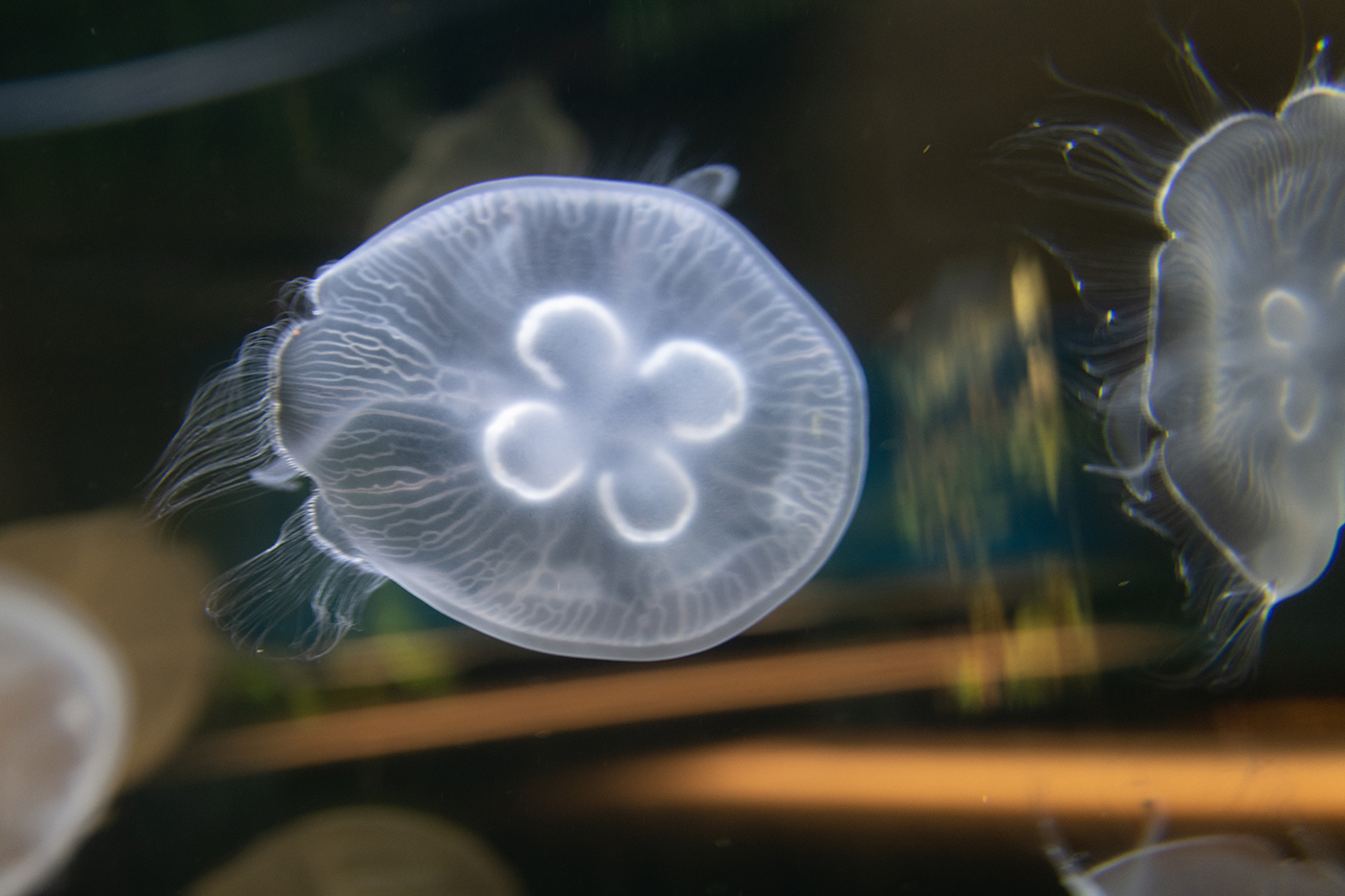
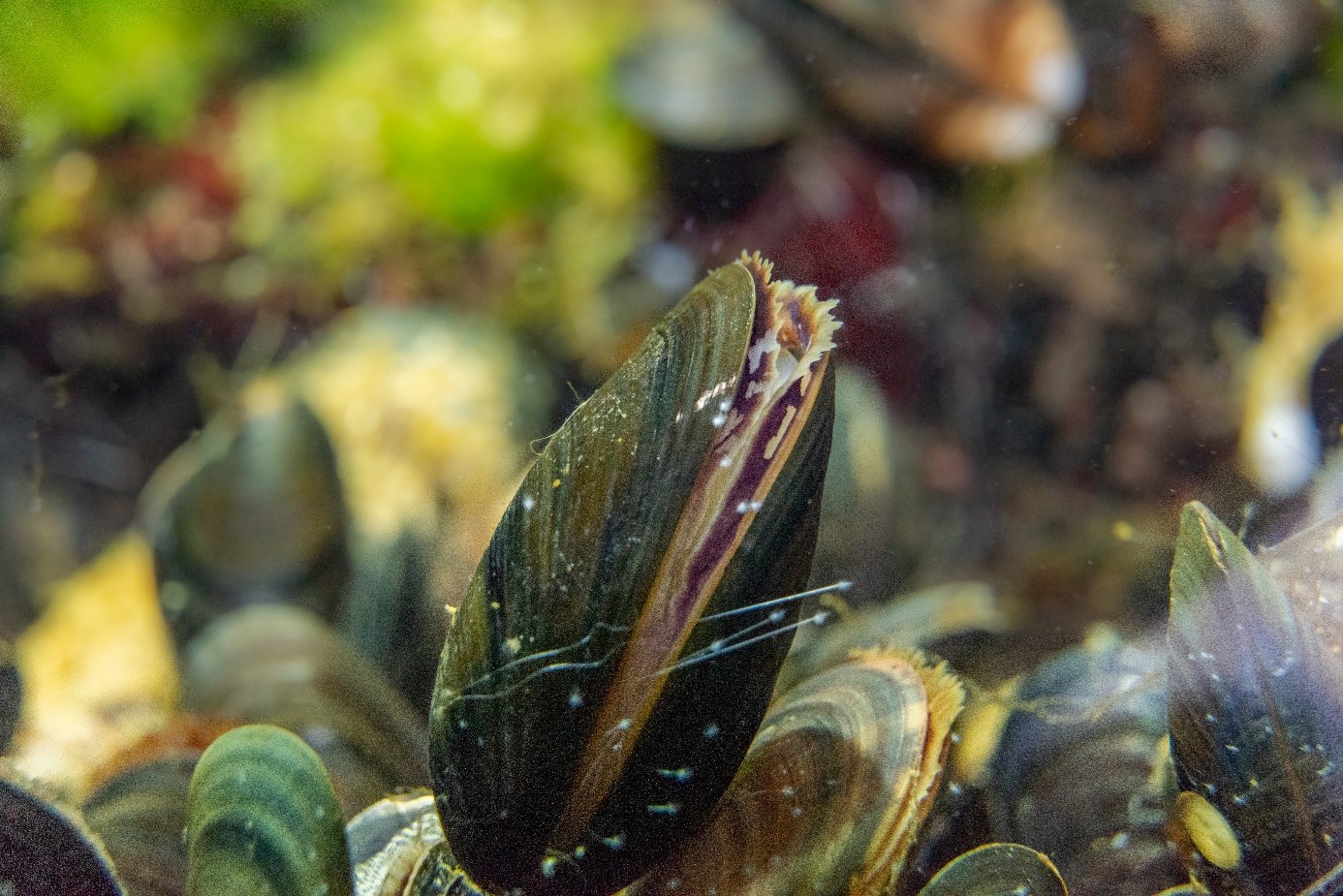
In one of the cylinder aquariums, graceful jellyfish drift through the water, while in the other, mussels live attached to ropes.

  • Facts about the moon jellyfish
    Scientific name:

    Aurelia sp.

    Size:

    Up to about 25 cm

    Lifespan:

    12–15 months as an adult; in its polyp stage it can live indefinitely

    Offspring:

    Reproduces by cloning; typically 8–15 individuals develop from each polyp

    Diet:

    Small plankton animals

    Distribution:

    Found throughout the Baltic Sea, but more common in the southern parts

  • The moon jellyfish – the only jellyfish species in the Baltic Sea

    It produces eggs or sperm depending on whether it is female or male. Like all jellyfish, it has stinging cells that help it catch food. The moon jellyfish has a relatively weak venom, adapted to paralyse small plankton animals. These are caught by the stinging cells and then moved into the mouth and into the “stomach,” which is shaped like four small ears.

  • öronmanet

    The moon jellyfish

  • Facts about the blue mussel
    Scientific name:

    Mytilus edulis

    Size:

    2–3 cm in the Baltic Sea; much larger on the west coast

    Offspring:

    Releases eggs and sperm into the water; larvae develop and attach to a hard surface, where they form a shell

    Diet:

    Small plankton animals

    Distribution:

    Very common in the southern Baltic Sea, less common further north

  • Blue mussels are the most abundant species in the Baltic Sea in terms of biomass

    Did you know that all blue mussels in the Baltic Sea together filter a volume of water equal to the entire Baltic Sea? They live attached to surfaces using threads called byssal threads and feed by filtering plankton from the water. As larvae, they are free-swimming before settling on a hard surface, where they grow and develop hard shells for protection. In the Baltic Sea, blue mussels are much smaller than those on the west coast due to the lower salinity.

  • Blåmusslor

    Blue mussel