We use cookies to improve, measure and analyze the use of the website as well as for visitor statistics and marketing.

Leaf insects

Leaf insects are closely related to stick insects, but, as their name suggests, they look more like leaves. Their flat bodies, leaf-shaped legs and green colouring help them blend in among plants and protect themselves from predators.

  • They belong to a group of insects called phasmids. The name comes from their ability to almost “disappear” in nature through their remarkable camouflage.

    Many species are so well camouflaged that they can be difficult to spot, even at close range.

    They look like real leaves

    Leaf insects are masters of camouflage. Their bodies can be green, yellow or brown, and often have patterns that resemble leaf veins or small holes and marks on old leaves.

    As they move, they slowly sway back and forth to imitate leaves moving in the wind.

  • Facts about leaf insects
    Scientific name:

    Phylliidae

    Size:

    Around 3–12 centimetres, depending on the species.

    Number of species:

    There are around 100 species of leaf insects (Phylliidae) worldwide.

    Lifespan:

    Often around one year, but this varies between species.

    Diet:

    Leaves from various plants.

    Range:

    Tropical regions of Southeast Asia, New Guinea and Australia.

    At Skansen:

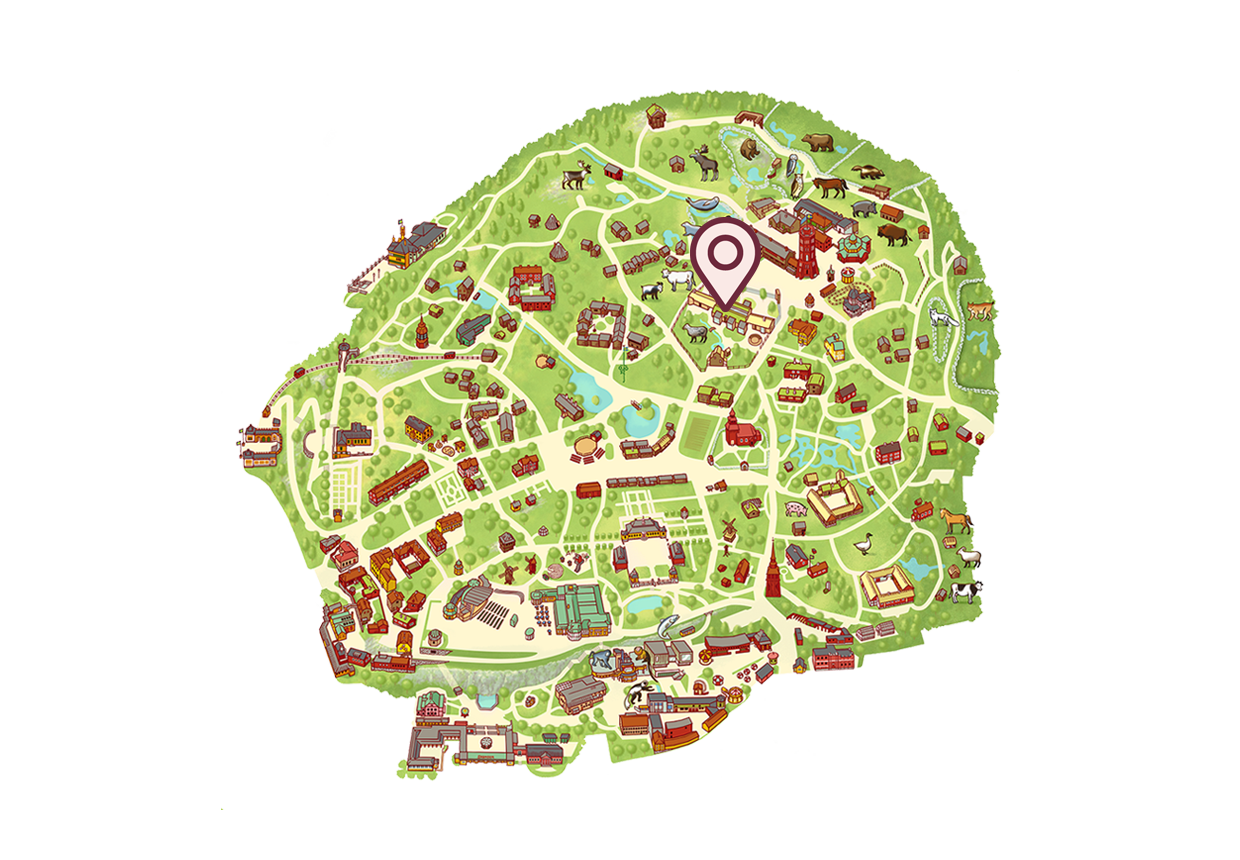
    You can see leaf insects at Lill-Skansen.

  • Plant-eaters that prefer to feed at night

    Leaf insects are herbivores that feed on leaves from trees and shrubs. They usually eat at night, when it is dark and there is less risk of being spotted by predators.

    During the day, they often sit completely still among the plants.

    Can reproduce without males

    In many species, females can lay eggs without mating with a male. This is called parthenogenesis. The eggs then develop into new females.

    The eggs look like small seeds and fall to the ground, where they develop for several months before hatching.

    They grow by shedding their skin

    Newly hatched young are called nymphs and do not yet look quite like the adults. To grow, they must shed their skin several times.

    After their final moult, they become adults and reach sexual maturity.

    Camouflage is their protection

    Unlike many other insects, leaf insects do not have strong defences. They rely almost entirely on camouflage to avoid predators.

    Their ability to imitate real leaves has made them some of the world’s most fascinating insects.

You can see leaf insects at Lill-Skansen