We use cookies to improve, measure and analyze the use of the website as well as for visitor statistics and marketing.

The Post Office

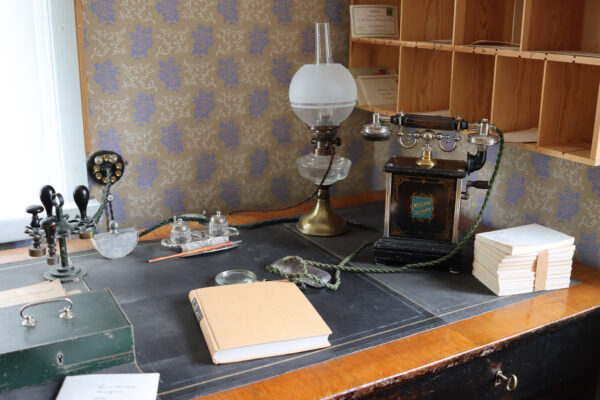
The Post Office recreates a home and a post office from the early 1910s. Step into the postmaster’s home, and see how his family lived and worked.

  • Facts about the Post Office
    Origin:

    Storgatan in Virserum, Småland

    Built:

    Probably in the 1840s, with an extension in the 1860s

    Erected at Skansen:

    1963

    About the building:

    A two-storey log building with cornice panels. Gable roof with pine shingles.

  • In smaller communities in the 1910s, there were no dedicated postal buildings. Instead, post was delivered to the postmaster’s home. No special training was required to run a post office – the postmaster simply had to be organised and able to write and count well enough.

    Per August and Sofia Nilsson bought the red Post Office, which at the time was located on Storgatan in Virserum, in 1866. Together with their children, they lived in four rooms and a kitchen. They operated a post office between 1896 and 1911 in two smaller rooms.

  • Get up close at Skansen!

    At the Post Office, you can visit a home from the early 20th century and find out what working at a post office was like. Meet Skansen´s costumed interpreters who will describe the Nilsson family and their lives.

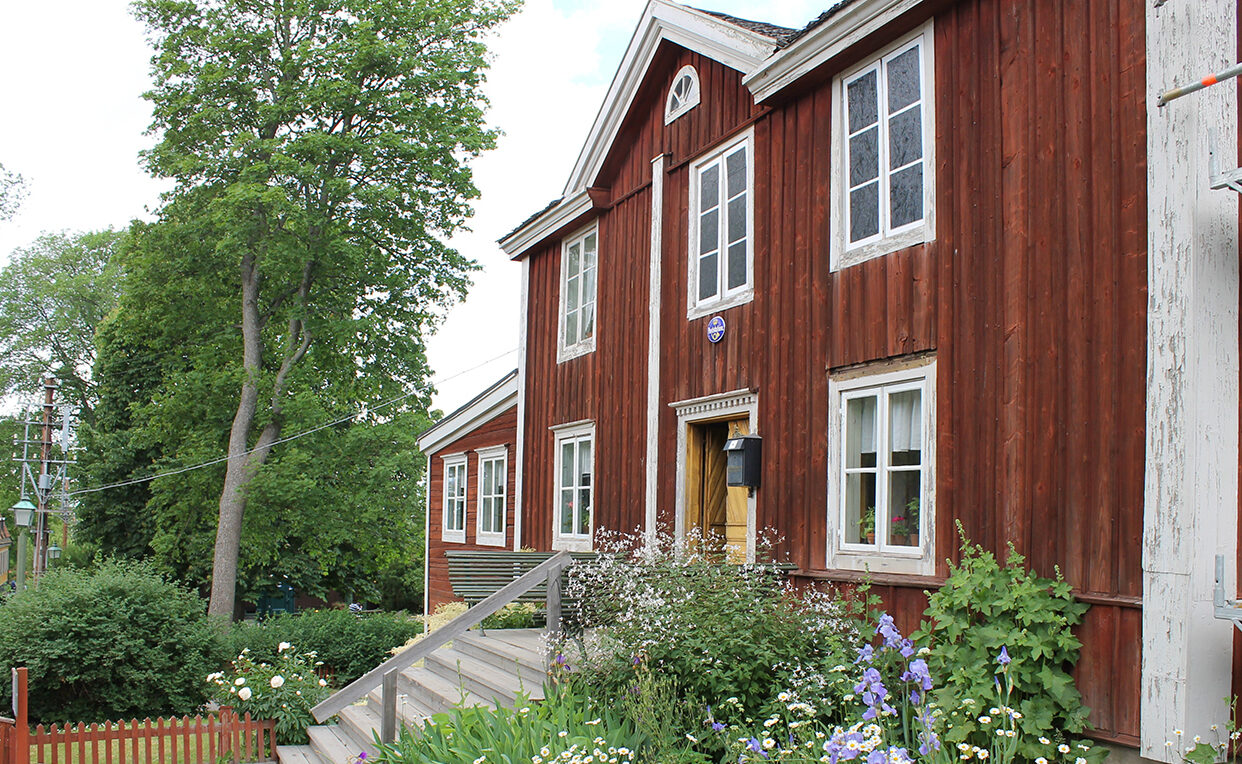
Post Office, Photo: Johanna Krumlinde
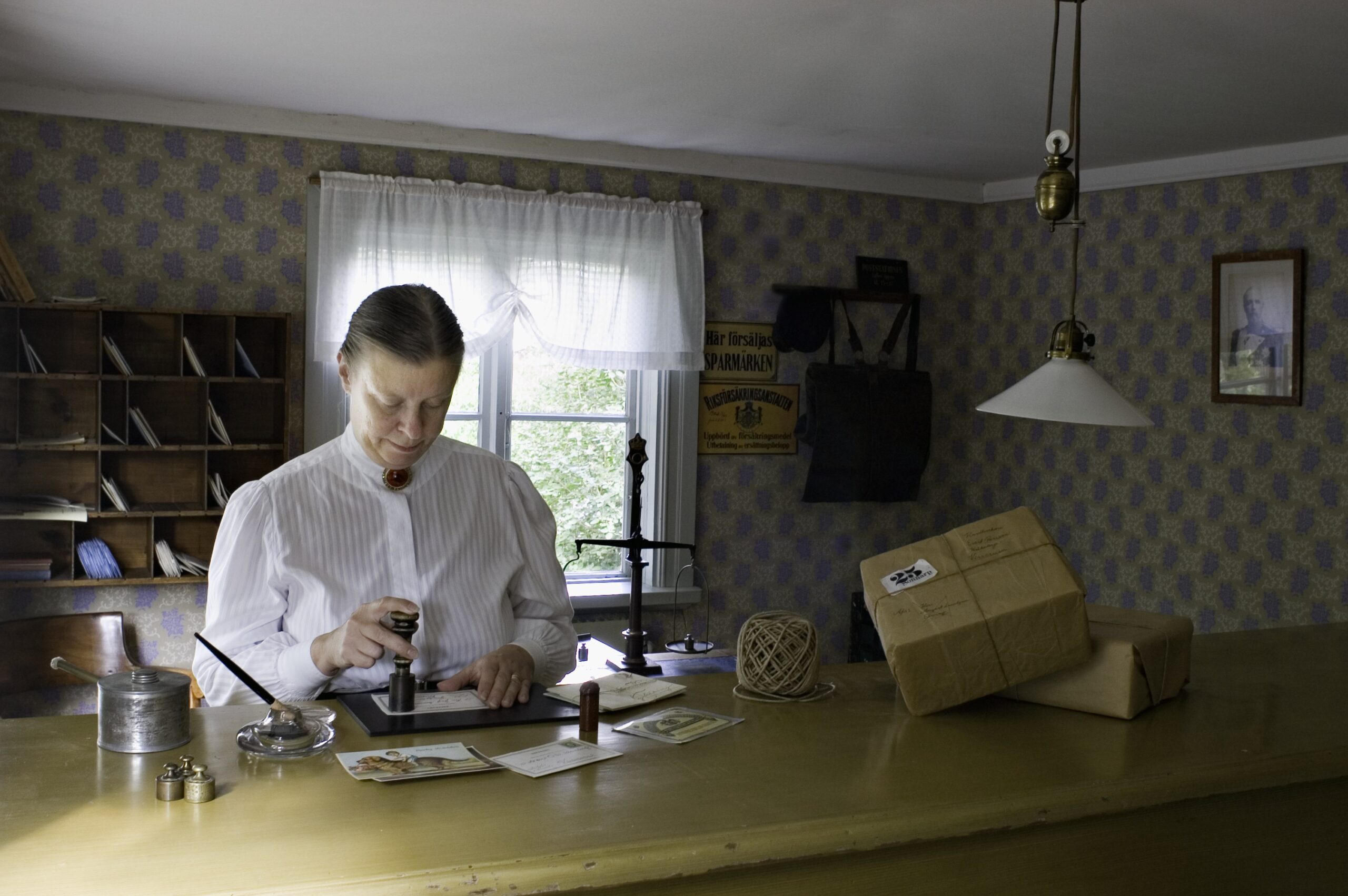
Post Office interior, photo: Marie Andersson
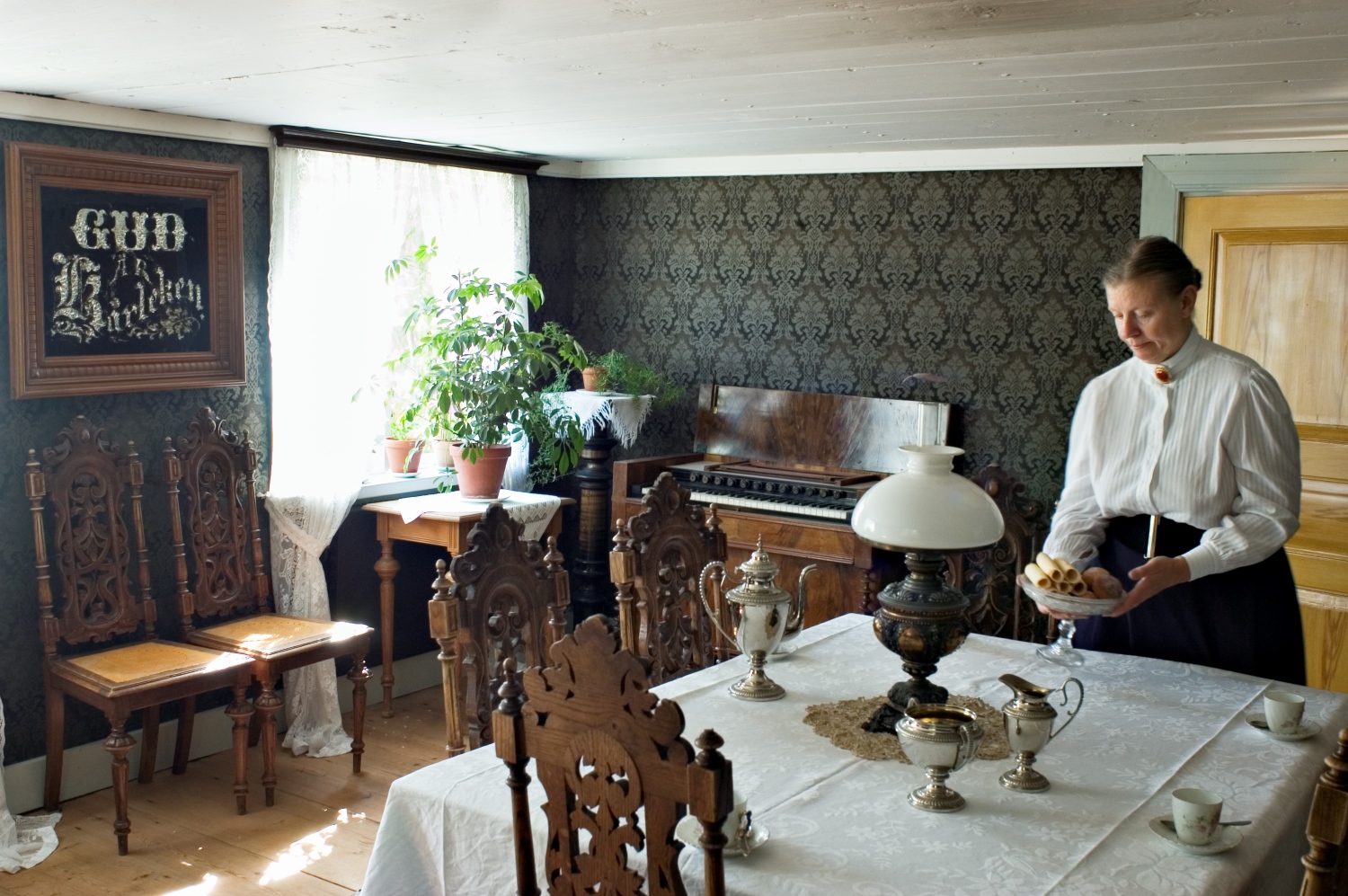
The Post Office's hall, photo: Marie Anderson
  • Stamps, mail order purchases and extra income

    The people of Virserum came to the Post Office to collect and drop off mail, buy stamps and order goods from a mail order catalogue. The mail order companies Fröberg and Åhlén & Holm (now Åhléns) sold paper posters, decorative items, aftershave and soaps that were sent by package.

    The Post Office was open for much of the day, but running it was poorly paid. In order to survive financially, the family – just like many others – had to take on extra work. Per August brewed drinks while Sofia baked biscuits and pretzels to sell.

    The emergence of popular movements and diphtheria

    The Nilsson family were teetotallers, and were members of the Swedish Missionary Covenant Church. The temperance movement and the Missionary Covenant Church were two popular movements that attracted many new members in the late 19th century. No alcohol was therefore consumed in the Nilsson family home, and the family’s life was characterised by their faith. In the main room, which was used on Sundays and for sewing sessions, a large picture frame hangs with the text “God is love” in glossy letters.

    Per August and Sofia had eight children, several of whom died in infancy. At the beginning of the 20th century, diphtheria was a common disease that affected many children. Today, vaccination and improved hygiene mean that the disease is rare in Sweden.

The Post Office's Phone

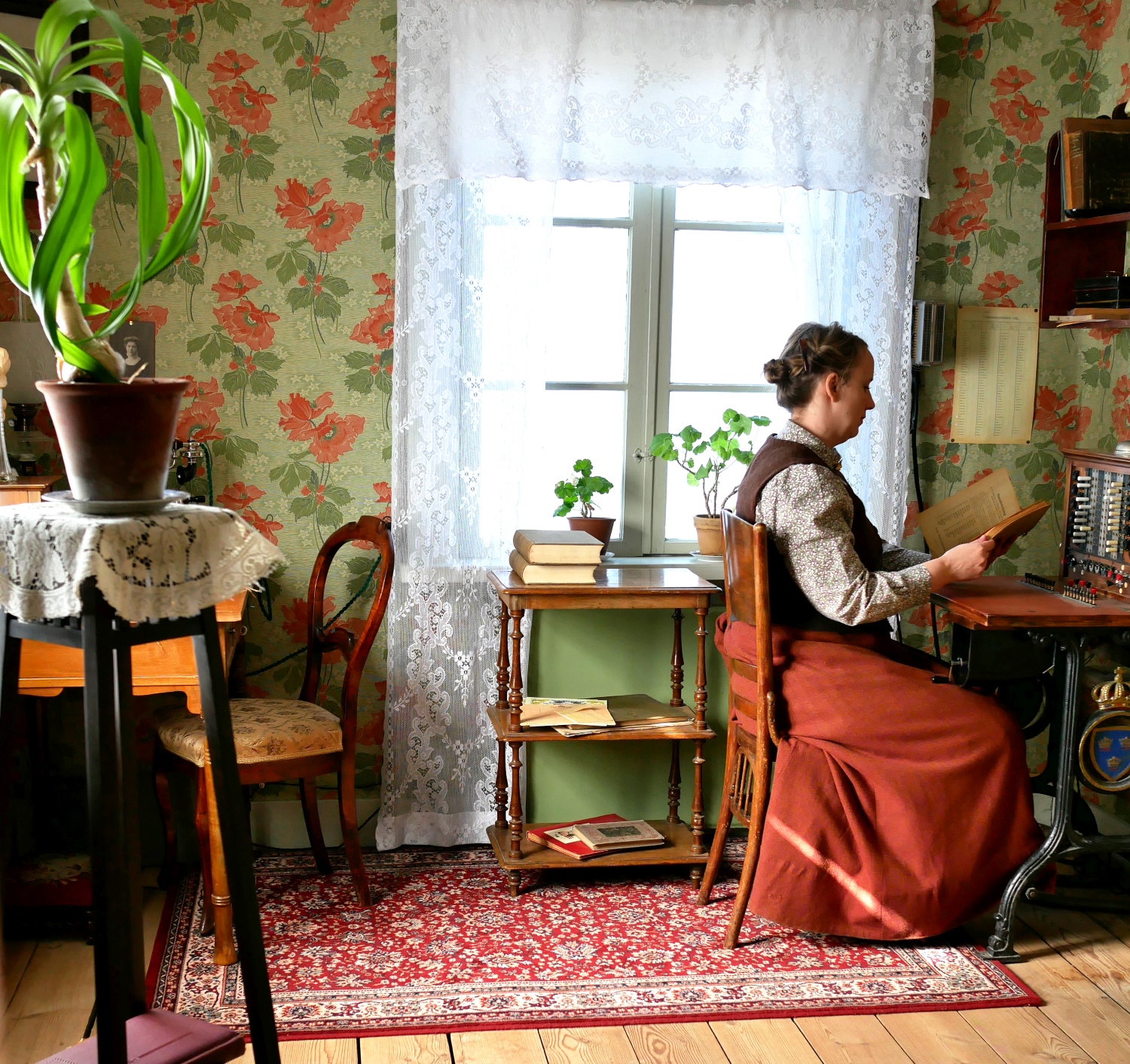
At the end of the 19th century, the telephone became increasingly common and many telephone networks were created. To enable two people to call each other, calls were connected by a switchboard operator. The cities had large telephone exchanges with many employees, but in smaller towns an individual often had the switchboard in their home. On the upper floor of the Post Office is a small telephone exchange for 20 subscribers, meaning that 20 households could connect to and use the telephone exchange.

The telephone exchange is not currently open.

Find out more about the telephone exchange (in Swedish) on KulturPunkt

Find out more about the telephone exchange (in Swedish) on KulturPunkt

  • “Demolish the eyesore!”

    In the 1950s, Skansen began planning to display buildings from a more contemporary period. There was also a desire for Skansen to show and describe public buildings such as post offices and schools.

    At the time, the Post Office in Virserum was earmarked for demolition. According to a newspaper article, local people area had called for the ‘eyesore’ to be demolished. Instead, Skansen bought the building in 1960, and three years later the Post Office reopened

    Frontispiece, beautiful cornicing and reconstructed staircases

    The post office is a two-storey log building that has been painted with red whitewash. The building has an asymmetrical frontispiece. The corners are covered with pale painted boards which, together with the rich cornicing, give the impression of pilasters with capitals.

    The ground floor windows are lower than those on the upper floor, suggesting that the house was extended upwards. The wide steps were reconstructed at Skansen from old photographs, as the original steps had been demolished when the road on which the Post Office stood in Virserum was widened.

  • Accessibility

    The post office is reached via an external staircase. Inside the home, the thresholds are high. The environment is not accessible.

Day Time
15 April 2026 10.00-15.00
16 April 2026 10.00-15.00
17 April 2026 10.00-15.00
18 April 2026 10.00-16.00
19 April 2026 10.00-16.00
20 April 2026 10.00-15.00
21 April 2026 10.00-15.00
22 April 2026 10.00-15.00
23 April 2026 10.00-15.00
24 April 2026 10.00-15.00
25 April 2026 10.00-16.00
26 April 2026 10.00-16.00
27 April 2026 10.00-15.00
28 April 2026 10.00-15.00
29 April 2026 10.00-15.00
30 April 2026 10.00-15.00
Show more