We use cookies to improve, measure and analyze the use of the website as well as for visitor statistics and marketing.

Pharmacy

In an 1790s pharmacy, customers might have found plants, minerals and animal products from all over the world. Pills and other remedies were prepared on site by the pharmacist, who had specialist medical knowledge. People came here to buy preparations believed to relieve or cure different illnesses and complaints. Step inside Skansen's pharmacy and explore a world of remedies, science and traditional healing.

  • Facts
    Built:

    Late 1600s

    Interior:

    The fittings in the pharmacy shop come from the royal pharmacy at Drottningholm Palace outside Stockholm, probably from the 1790s

    Original location:

    Drottninggatan 112, Stockholm

    Moved to Skansen:

    1907 to Lower Solliden, moved to its present location in 1931

    Construction:

    One-storey timber building clad with vertical wooden panelling

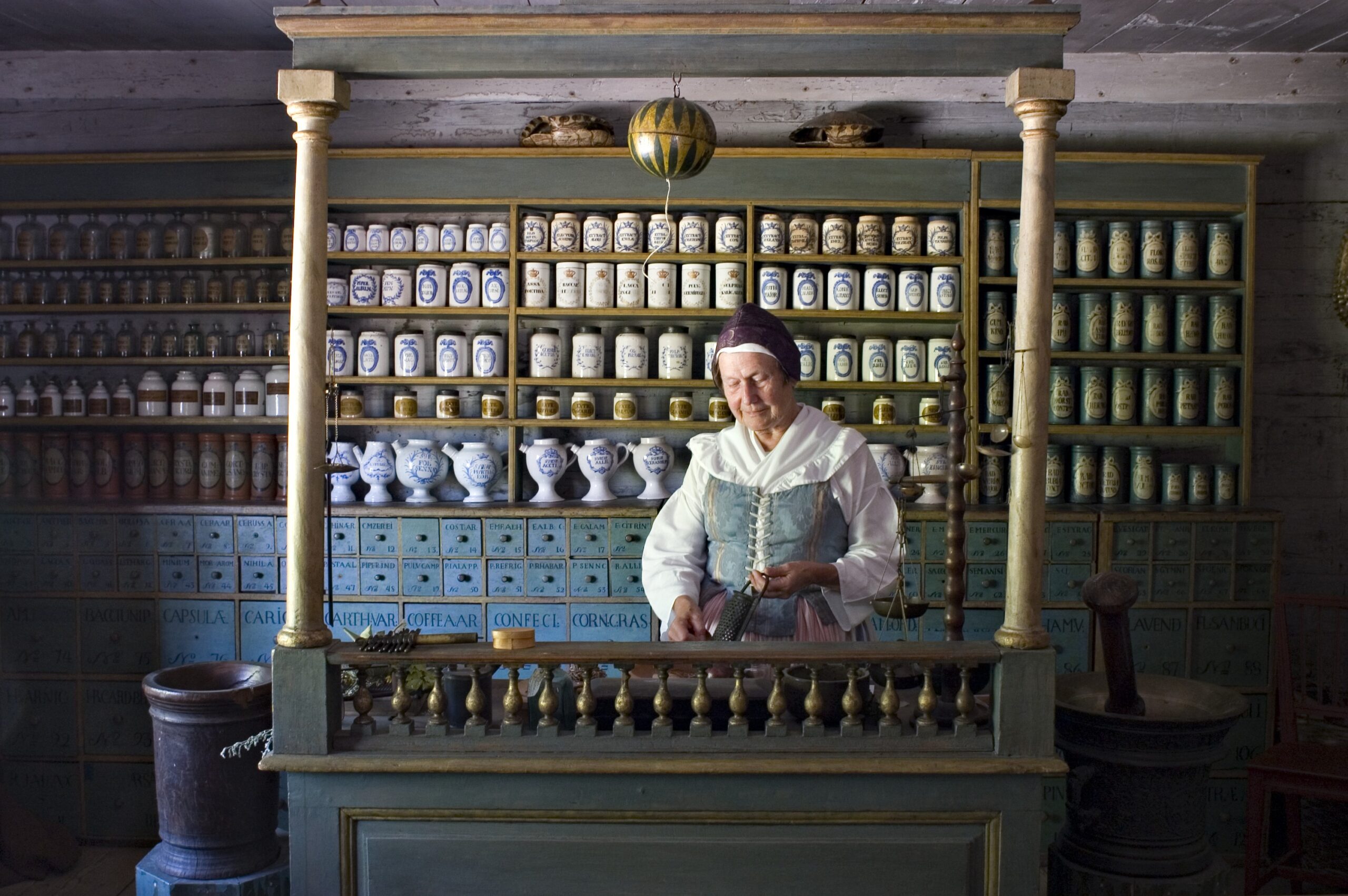
  • Skansen’s pharmacy is a reconstruction of a pharmacy from late 1700s Stockholm, and has been created using inventories and images from the period. The shop fittings come from the royal pharmacy at Drottningholm Palace, while the counter is a copy from a pharmacy in Medevi. The shelves and drawers in the storeroom come from Carl Wilhelm Scheele’s pharmacy in Köping and probably date from the early 1700s. Some of the larger drawers come from the Unicorn Pharmacy in Stockholm.

    Pharmacies like this displayed striking objects to show that exotic medicines from across the world could be bought here. A stuffed crocodile hung alongside jars containing Spanish fly and real mummy powder. There were also many medicinal plants, grown in the pharmacist’s garden or gathered in the wild.

    Active ingredients from plants, minerals and animal products were extracted and used to make medicines intended to treat diseases and ailments. Shopping at the pharmacy could be expensive, and was far from something everyone could afford.

    Science and medicine

    During the 17th and 18th centuries, major advances were made in natural science. Several Swedes became internationally known for their discoveries, including the botanist Carl Linnaeus and the chemist Carl Wilhelm Scheele. Scientific findings and methods soon became an important foundation for medicine.

    To become a pharmacist, a person needed practical training as well as knowledge of botany – the study of plants. The pharmacist worked with apprentices and journeymen, in a system similar to the craft guilds. Apprentices carried out the simplest tasks, and apprentice boys sometimes slept at their workplace. This was practical, as pharmacies were usually open at night during the 18th and 19th centuries.

    Scientific medicine and folk medicine

    Pharmacies belonged to the world of learned, scientific medicine. Pharmacists used specialist literature and the Swedish pharmacopoeia, which described how preparations should be made. At the same time, older forms of traditional folk medicine also influenced some remedies. These traditions were based on inherited experience, and sometimes on ideas such as “like cures like”.

    For example, pharmacies could sell earthworm oil. A person with stiff joints might rub on the oil in the hope of becoming as supple and mobile as an earthworm. Both scientific medicine and folk healing also shared knowledge of medicinal plants: foxglove was used for heart problems, while valerian was thought to have a calming effect.

  • Inside the pharmacy

    A 1790s pharmacy was divided into three rooms. The first was the shop (officin), where customers entered from the street. Here, drawers and porcelain jars held different active ingredients. In the middle of the room was the pharmacist’s workbench, where prescriptions and preparations were made.

    To make pills, the active ingredients were ground in a mortar and mixed with a binding liquid. The mass was cut into equal pieces with a pill cutter and then rolled into round pills using a round tool.

    Behind the shop was the laboratory, with mortars, heavy presses and an oven. Here, active substances were extracted from plants and animal products. In the innermost room, the storeroom, large quantities of dried plants were kept, including bilberries for diarrhoea, cardamom for coughs and “hell seeds”, a type of caraway believed to have life-giving properties.

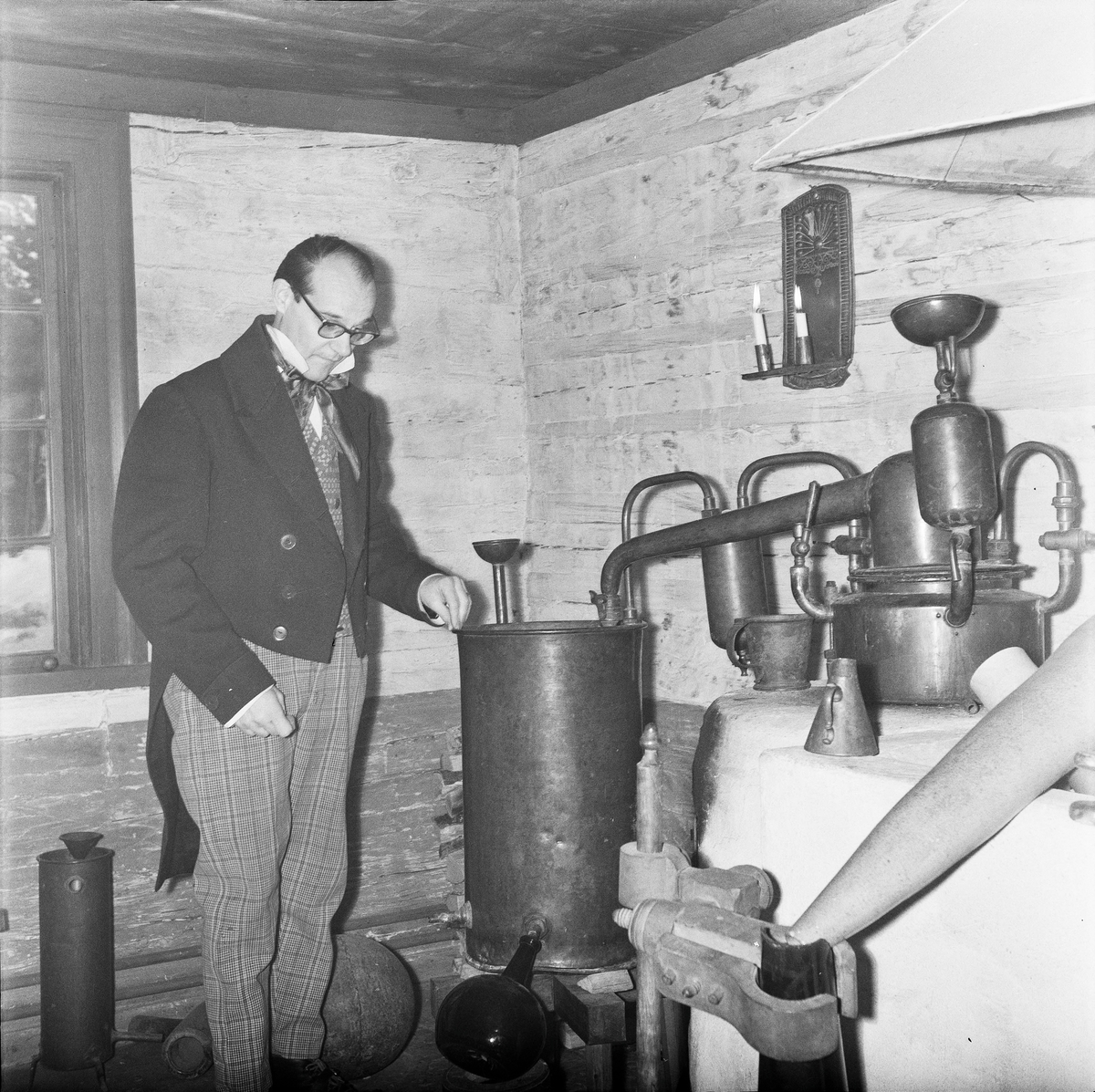
Demonstration in Skansen's pharmacy in 1964
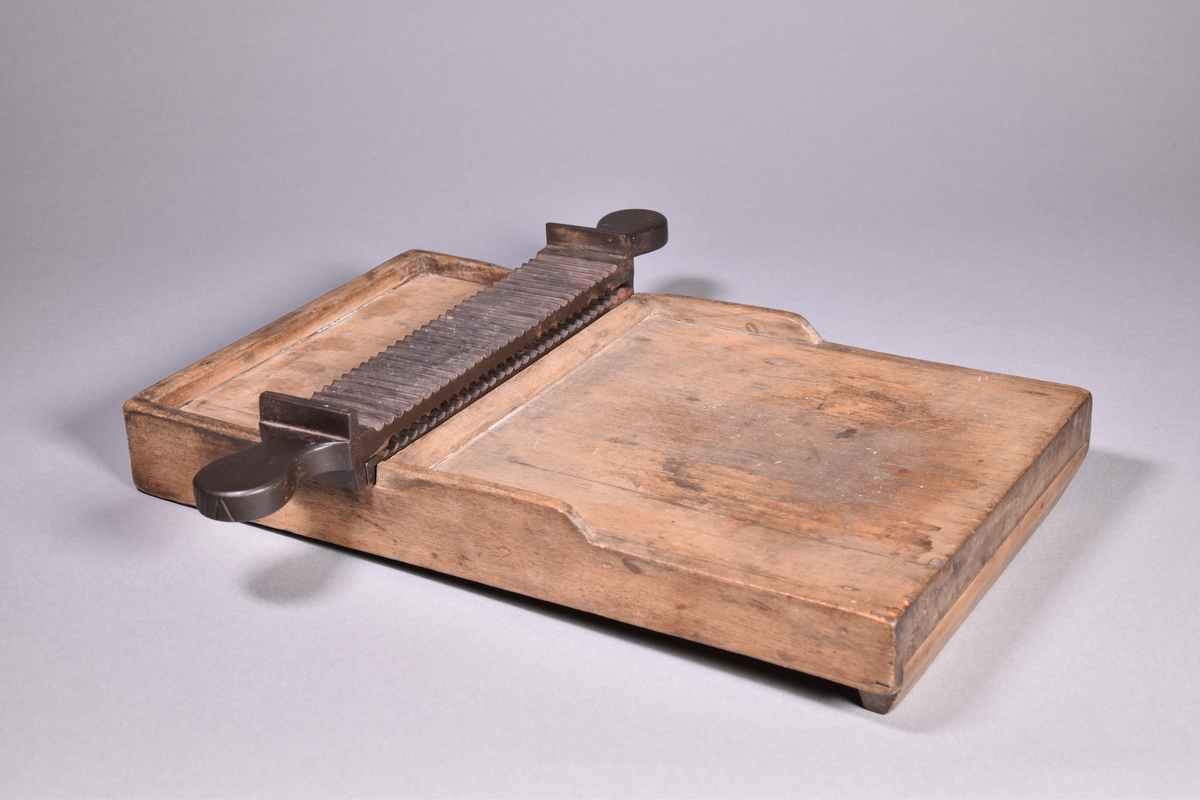
A pill board (pillerbräda) from Skansen's collections
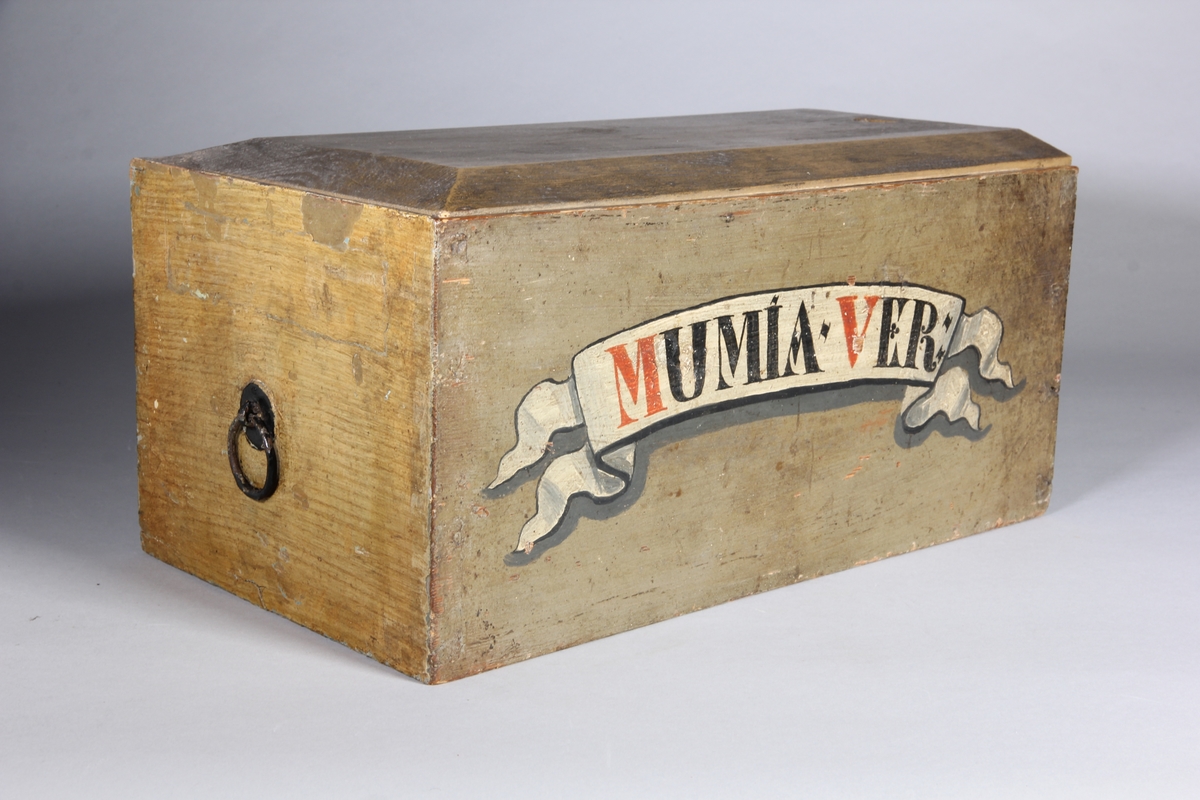
A box of mummy powder from Skansen's collections
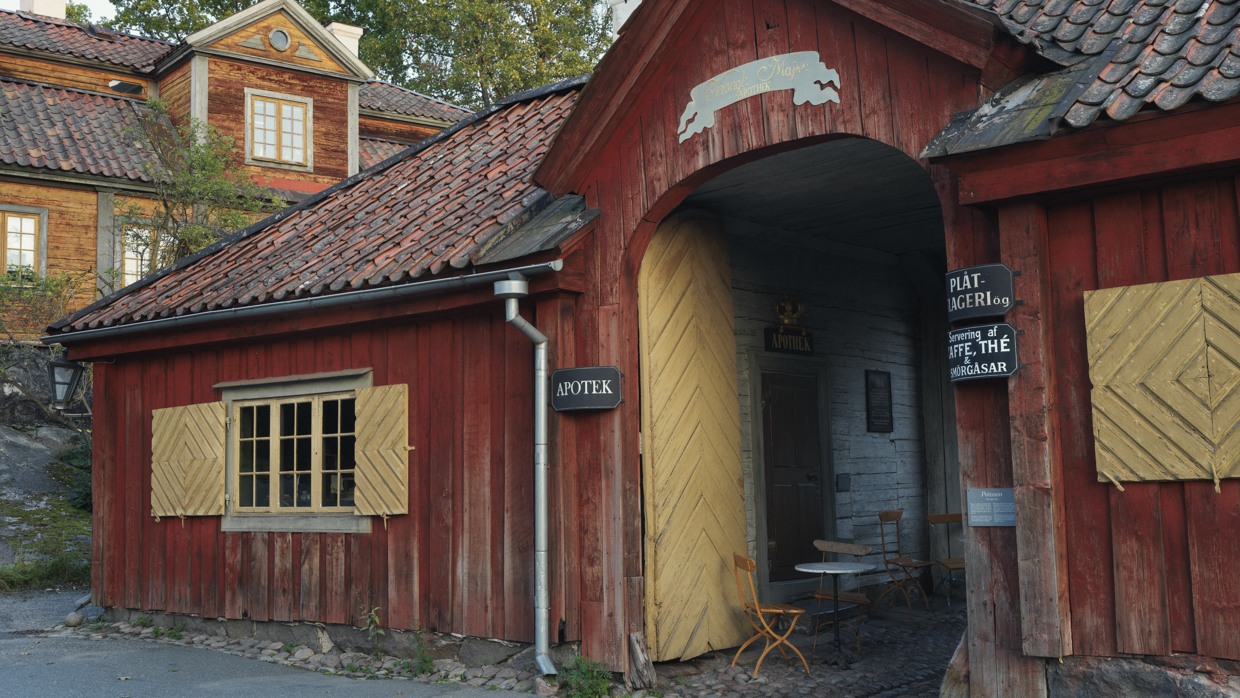
The exterior part of the pharmacy and Café Petissan

  • Pharmacy through the ages

    Ideas about the causes of disease have changed over time. Until the second half of the 1800s, illness was often explained by an imbalance of bodily fluids, bad air, or even the positions of heavenly bodies. Today, diseases are mainly understood through biomedical explanations.

    Almost the entire range of medicines once sold in pharmacies has since been replaced. Remedies that proved ineffective, and in many cases harmful, are no longer used. In some cases, active components from older remedies have been refined, made more effective, or made less harmful through chemistry.

    The role of the pharmacist has also changed. In the past, pharmacists both made and sold medicines. Today, pharmacy work is mainly about dispensing medicines and providing information about how they should be used. The craft of making medicines has largely moved from pharmacies to the pharmaceutical industry.

    About the building

    Skansen’s pharmacy is housed in the same building as Café Petissan. The timber building was probably constructed in the late 1600s and originally stood on Drottninggatan in central Stockholm. It was part of the Scheffler Palace, later known as the “Ghost Castle”, still located on Drottninggatan.

    The building originally served as a residence. In the late 1800s century, a café opened in the right-hand part of the building. It became popular with students, and the name Petit Café gradually became Petissan in everyday speech. In 1907, Stockholm University College wanted to build a larger building on the site, and the house was moved to Skansen. It was first placed at Lower Solliden and moved to its present location in the Town Quarter in 1931.

Day Time
Today, 23 June 2026 11:00 - 17:00
24 June 2026 11:00 - 17:00
25 June 2026 11:00 - 17:00
26 June 2026 11:00 - 17:00
27 June 2026 11:00 - 17:00
28 June 2026 11:00 - 17:00
29 June 2026 11:00 - 17:00
30 June 2026 11:00 - 17:00
1 July 2026 11:00 - 17:00
2 July 2026 11:00 - 17:00
3 July 2026 11:00 - 17:00
4 July 2026 11:00 - 17:00
5 July 2026 11:00 - 17:00
6 July 2026 11:00 - 17:00
7 July 2026 11:00 - 17:00
8 July 2026 11:00 - 17:00
9 July 2026 11:00 - 17:00
10 July 2026 11:00 - 17:00
11 July 2026 11:00 - 17:00
12 July 2026 11:00 - 17:00
13 July 2026 11:00 - 17:00
14 July 2026 11:00 - 17:00
15 July 2026 11:00 - 17:00
16 July 2026 11:00 - 17:00
17 July 2026 11:00 - 17:00
18 July 2026 11:00 - 17:00
19 July 2026 11:00 - 17:00
20 July 2026 11:00 - 17:00
21 July 2026 11:00 - 17:00
22 July 2026 11:00 - 17:00
23 July 2026 11:00 - 17:00
24 July 2026 11:00 - 17:00
25 July 2026 11:00 - 17:00
26 July 2026 11:00 - 17:00
27 July 2026 11:00 - 17:00
28 July 2026 11:00 - 17:00
29 July 2026 11:00 - 17:00
30 July 2026 11:00 - 17:00
31 July 2026 11:00 - 17:00
1 August 2026 11:00 - 17:00
2 August 2026 11:00 - 17:00
3 August 2026 11:00 - 17:00
4 August 2026 11:00 - 17:00
5 August 2026 11:00 - 17:00
6 August 2026 11:00 - 17:00
7 August 2026 11:00 - 17:00
8 August 2026 11:00 - 17:00
9 August 2026 11:00 - 17:00
10 August 2026 11:00 - 17:00
11 August 2026 11:00 - 17:00
12 August 2026 11:00 - 17:00
13 August 2026 11:00 - 17:00
14 August 2026 11:00 - 17:00
15 August 2026 11:00 - 17:00
16 August 2026 11:00 - 17:00
22 August 2026 11:00 - 17:00
23 August 2026 11:00 - 17:00
5 September 2026 11:00 - 17:00
6 September 2026 11:00 - 17:00
12 September 2026 11:00 - 17:00
13 September 2026 11:00 - 17:00
24 October 2026 10:00 - 16:00
25 October 2026 10:00 - 16:00
26 October 2026 10:00 - 16:00
27 October 2026 10:00 - 16:00
28 October 2026 10:00 - 16:00
29 October 2026 10:00 - 16:00
30 October 2026 10:00 - 16:00
31 October 2026 10:00 - 16:00
1 November 2026 10:00 - 16:00
14 November 2026 11:00 - 16:00
15 November 2026 11:00 - 16:00
28 November 2026 10:00 - 16:00
29 November 2026 10:00 - 16:00
4 December 2026 10:00 - 16:00
5 December 2026 10:00 - 16:00
6 December 2026 10:00 - 16:00
12 December 2026 10:00 - 16:00
13 December 2026 10:00 - 16:00
19 December 2026 10:00 - 16:00
20 December 2026 10:00 - 16:00
Show more