We use cookies to improve, measure and analyze the use of the website as well as for visitor statistics and marketing.

Delsbo Farmstead

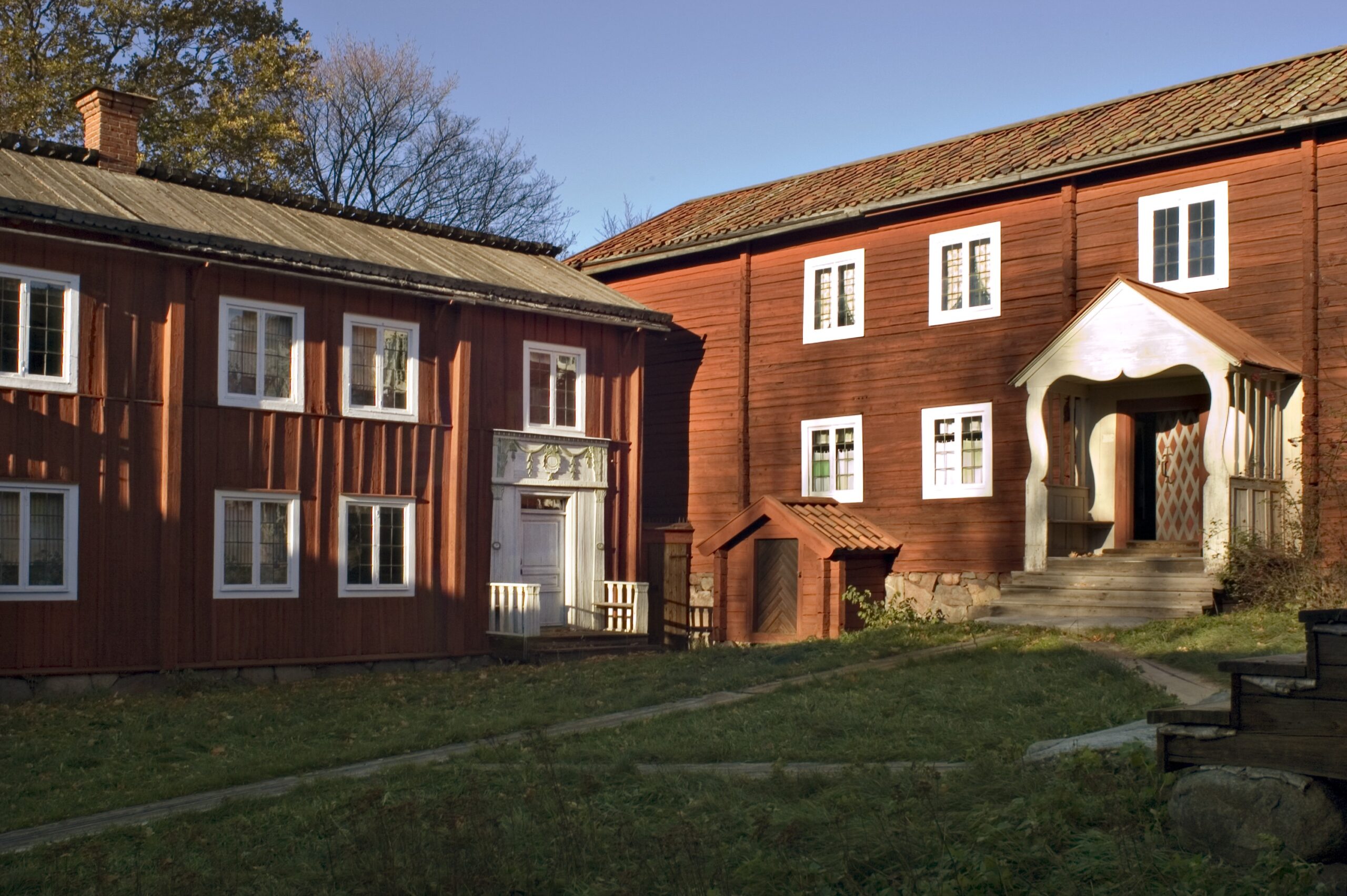
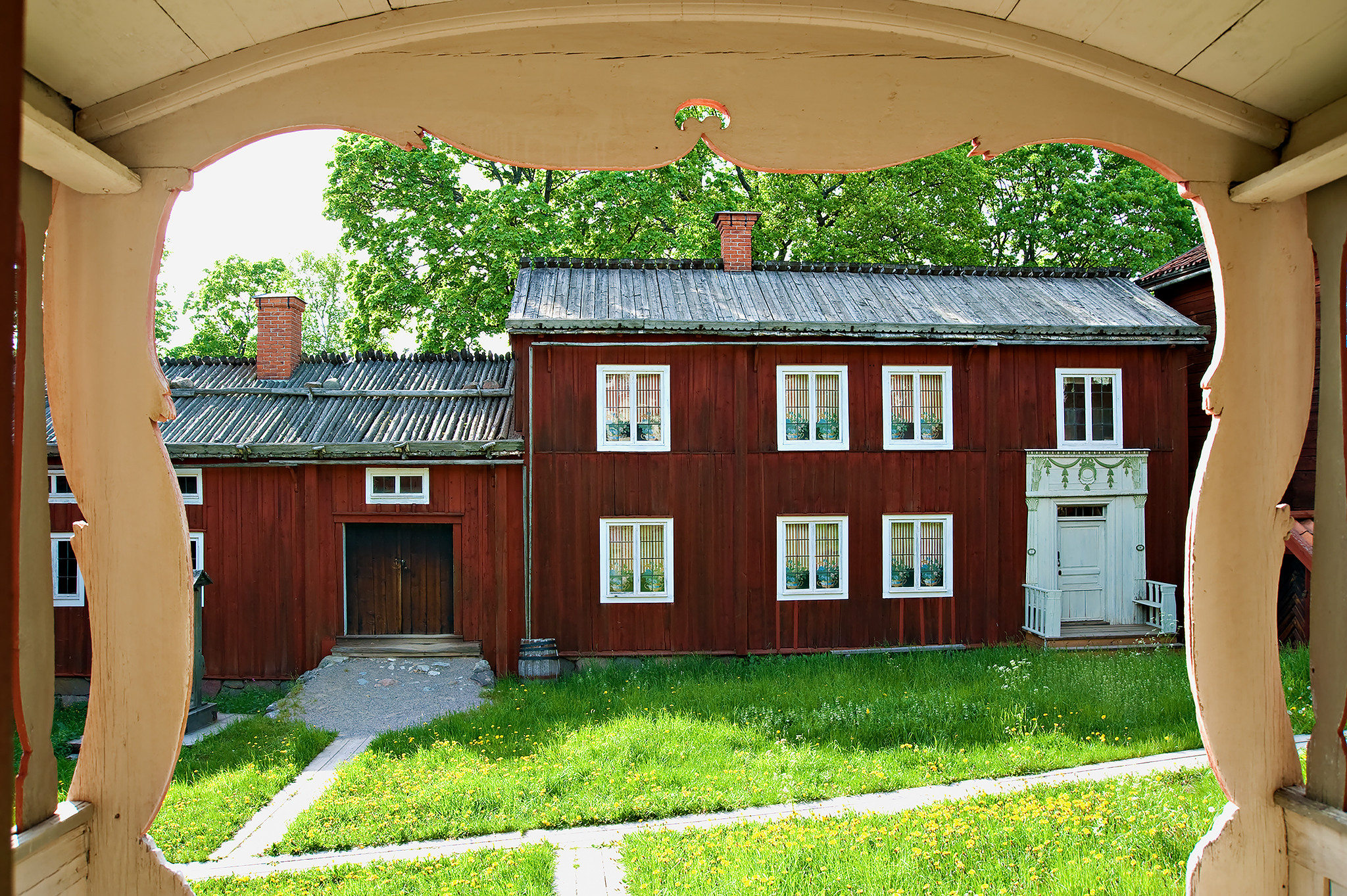
The larger farmhouses of Hälsingland province are known for their rich decorations and painted interiors. Delsbo Farmstead shows a farmhouse from around 1850. At this time, a prosperous farm could consist of 20 or 30 buildings, sometimes even more. Each building had its own function, and the houses for the family and the animals were arranged around an enclosed courtyard.

  • Facts
    Original location:

    Delsbo and Ljusdal, Hälsingland

    Built:

    Buildings from the 1500s to the first half of the 1800s

    Rebuilt at Skansen:

    1939–1940

    Construction:

    Log buildings with wooden panelling, painted red by the 1850s

  • On a farm like this, several generations lived side by side. The family lived in the main house and it was often placed on the north side of the courtyard. After handing over the farm to a younger generation, the grandparents could move into a separate cottage. This arrangement worked as a kind of pension or retirement security.

    Each building on the farm had a purpose, and even certain rooms had a role or usage. There was an everyday dwelling, guest rooms and buildings for animals, barns and storehouses. In Hälsingland, it was also common for farms to have buildings or rooms used especially for festivities. At Delsbo Farmstead, the guest house had several bedrooms. This was useful during weddings, when celebrations could last for several days and guests needed somewhere to sleep.

    The cowshed had stalls for the farm’s cows, but it was also furnished with a bed, table, chairs and a stove. During the summer, when the animals were away at the summer pasture, the cowshed could be used as a summer dwelling.

    Increased wealth and decorated houses

    By the 1800s, many farmers in Hälsingland had become increasingly prosperous. This prosperity came from a combination of crop rotation with flax as an important crop, as well as the growing value of the forest. Many farmers also had several sources of income which helped support the farm.

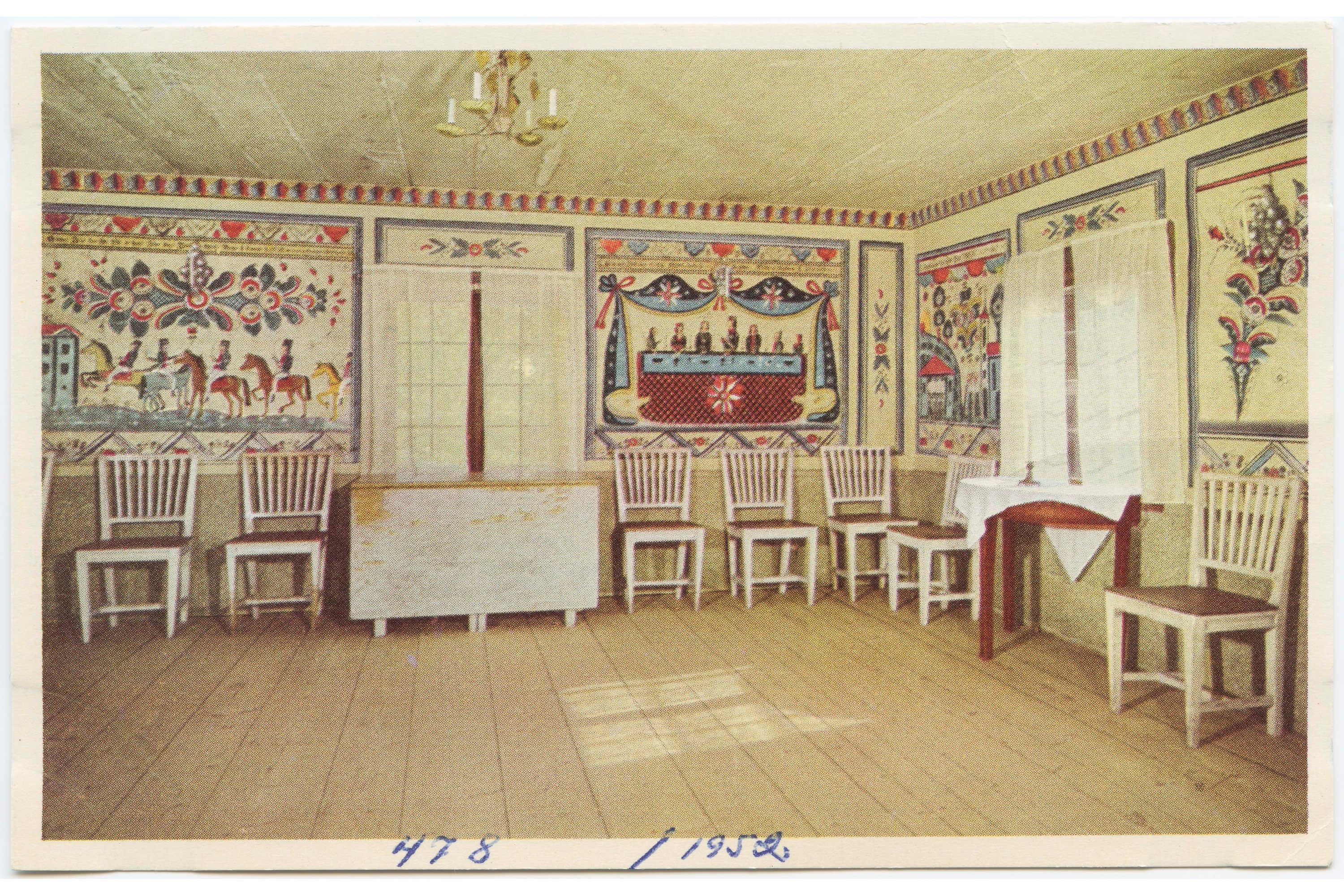
    This means that some could afford to build two-storey houses and decorate the interiors with wall and ceiling paintings, often made by travelling folk artists. The main building at Delsbo Farmstead comes from Västeräng village, and its ground floor was decorated by folk artists from Dalarna region. Upstairs there are wall and ceiling paintings by Gustaf Reuter, a folk artist active in Delsbo. Even the roller blinds were painted to give the impression of flowers and patterned curtains.

    The richly decorated farmhouses of Hälsingland have been part of the UNESCO World Heritage List since 2012.

  • SKAFOT.0002214

    Postcard from 1952 depicting the main building at Delsbo Farmstead

  • delsbogarden_20061110_Marie_Andersson

  • The move to Skansen

    Creating Delsbo Farmstead at Skansen took several years of planning. In 1928, Skansen bought a house from Bommens Farm in Västeräng village, which became the main building. Since 1870, it had only been used as a summer residence.

    During the 1930s, several other buildings were acquired, including the guest house from Sunnanås village in Ljusdal parish, the retirement cottage from Edsäng, as well as the stable and threshing barn.

    When the farmstead had been rebuilt at Skansen, there were 19 rooms to furnish. However, few objects had come with the buildings but Artur Hazelius, Skansen’s founder, had already collected furniture, household objects and costumes from Delsbo in the 1870s. The furnishing was based on estate inventories, interviews with people from the area, and the objects available in Skansen’s collections.

    More about the buildings

    The entrance porches are typical of Hälsingland farmhouses and are richly decorated. The guest house from Sunnanås has a porch in Gustavian style with carved garlands, while the buildings from Västeräng and Edsäng have porches in a curving Rococo style.

    Outside the farmstead stand two raised storehouses, originally from Sunnanås and Tjärnmyra, built in the 1500s and 1700s.

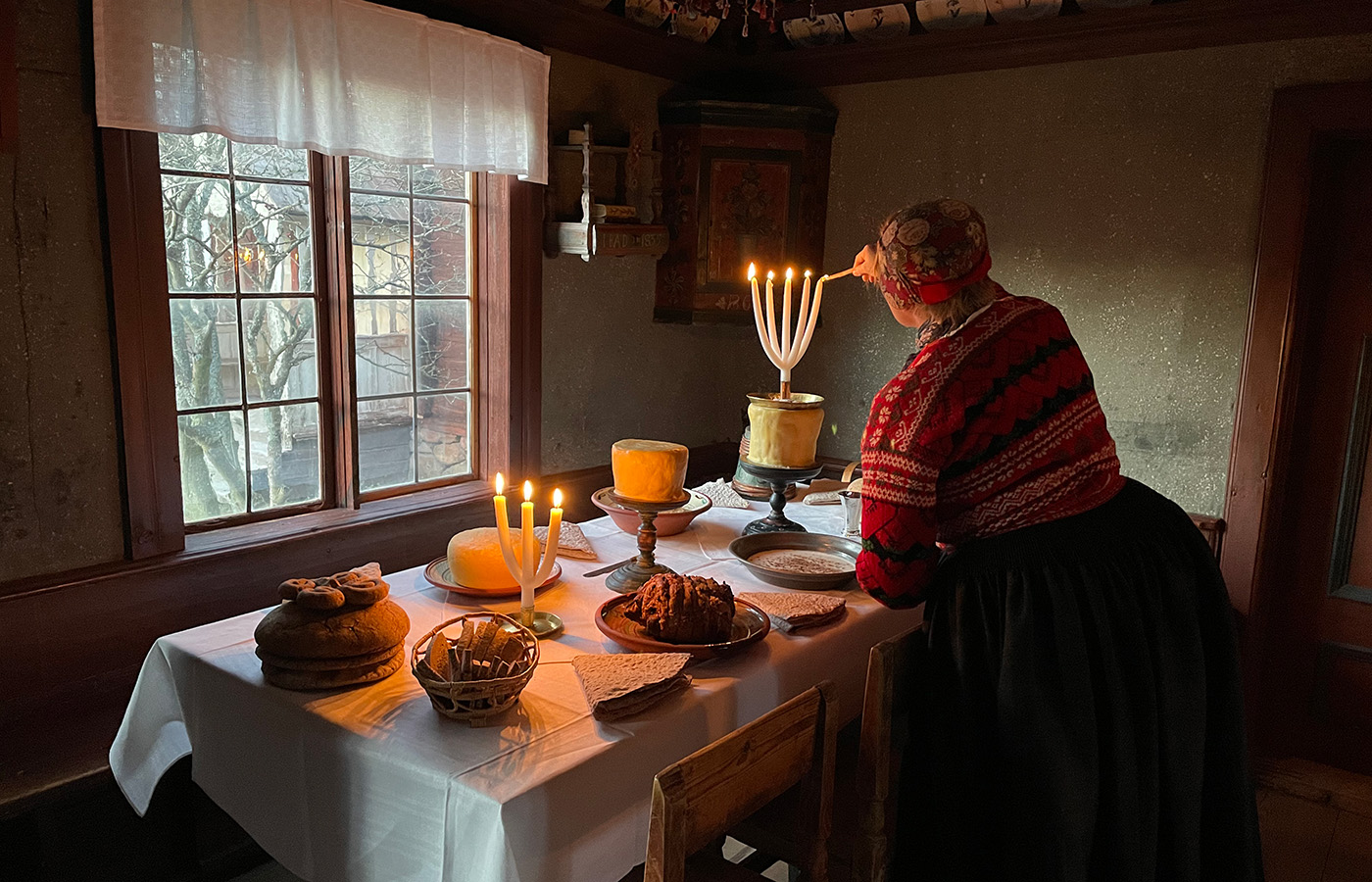
A historical Christmas buffet is laid out every year, with food cooked according to old recipes
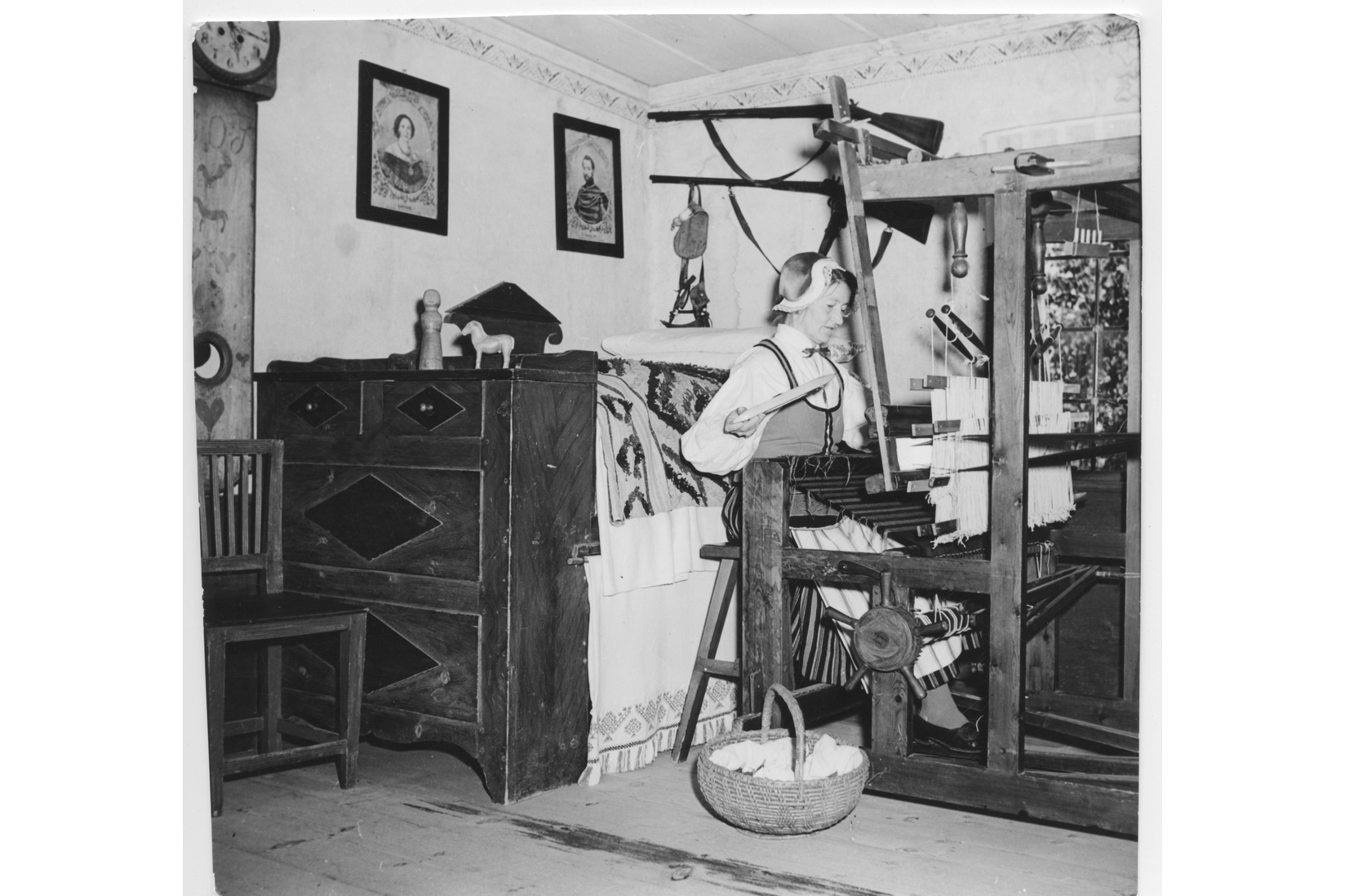
Weaving on a loom at Delsbo Farmstad, around 1946–1970. Photo: André och Irène Reisz / Nordiska museet (CC BY-NC-ND)
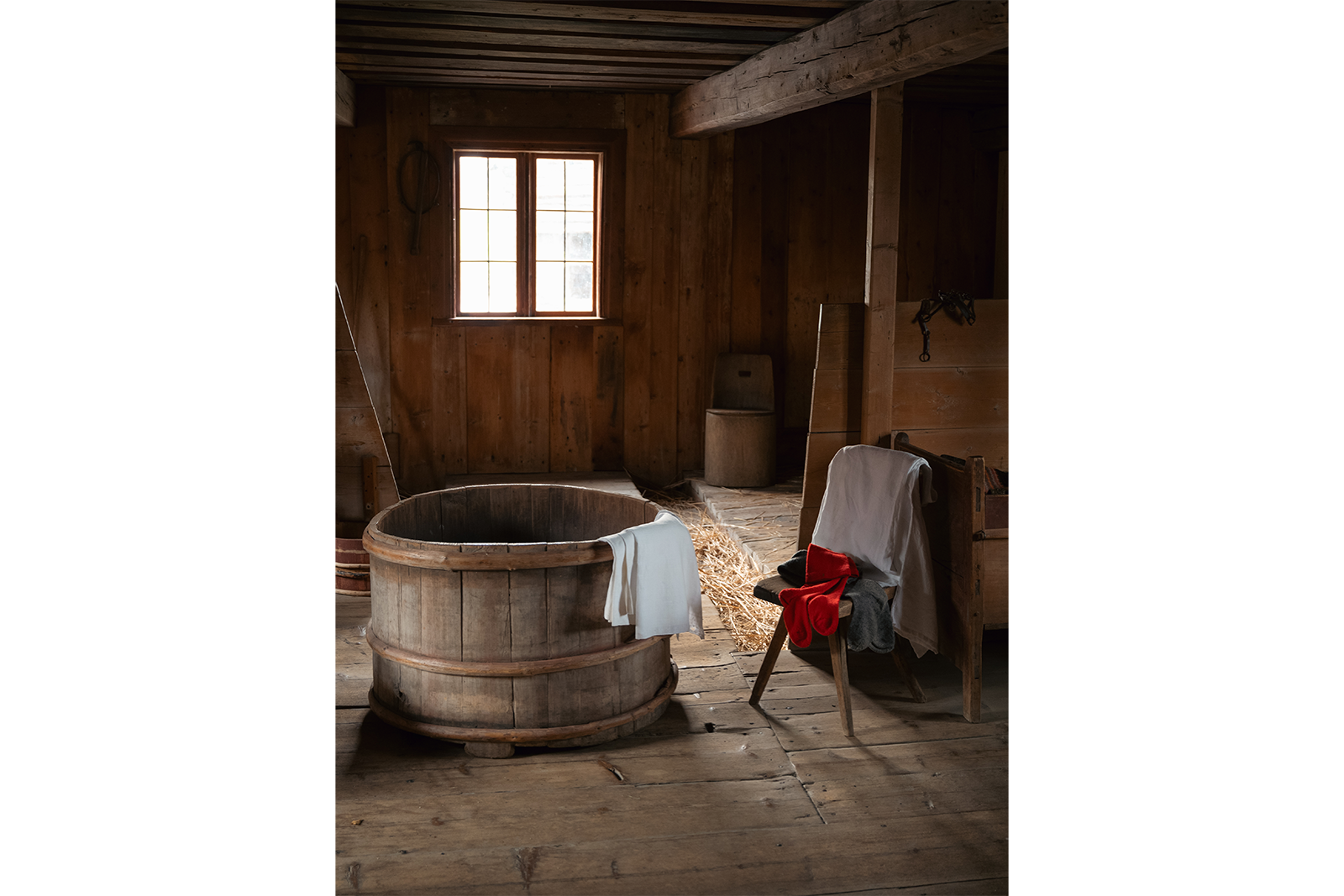
Hot tub and textiles in the barn during the Christmas period

  • Accessibility

    Accessibility is limited by thresholds and small steps.

Day Time
Today, 18 June 2026 10:00 - 17:00
19 June 2026 10:00 - 17:00
20 June 2026 10:00 - 17:00
21 June 2026 10:00 - 17:00
22 June 2026 10:00 - 17:00
23 June 2026 10:00 - 17:00
24 June 2026 10:00 - 17:00
25 June 2026 10:00 - 17:00
26 June 2026 10:00 - 17:00
27 June 2026 10:00 - 17:00
28 June 2026 10:00 - 17:00
29 June 2026 10:00 - 17:00
30 June 2026 10:00 - 17:00
1 July 2026 10:00 - 17:00
2 July 2026 10:00 - 17:00
3 July 2026 10:00 - 17:00
4 July 2026 10:00 - 17:00
5 July 2026 10:00 - 17:00
6 July 2026 10:00 - 17:00
7 July 2026 10:00 - 17:00
8 July 2026 10:00 - 17:00
9 July 2026 10:00 - 17:00
10 July 2026 10:00 - 17:00
11 July 2026 10:00 - 17:00
12 July 2026 10:00 - 17:00
13 July 2026 10:00 - 17:00
14 July 2026 10:00 - 17:00
15 July 2026 10:00 - 17:00
16 July 2026 10:00 - 17:00
17 July 2026 10:00 - 17:00
18 July 2026 10:00 - 17:00
19 July 2026 10:00 - 17:00
20 July 2026 10:00 - 17:00
21 July 2026 10:00 - 17:00
22 July 2026 10:00 - 17:00
23 July 2026 10:00 - 17:00
24 July 2026 10:00 - 17:00
25 July 2026 10:00 - 17:00
26 July 2026 10:00 - 17:00
27 July 2026 10:00 - 17:00
28 July 2026 10:00 - 17:00
29 July 2026 10:00 - 17:00
30 July 2026 10:00 - 17:00
31 July 2026 10:00 - 17:00
1 August 2026 10:00 - 17:00
2 August 2026 10:00 - 17:00
3 August 2026 10:00 - 17:00
4 August 2026 10:00 - 17:00
5 August 2026 10:00 - 17:00
6 August 2026 10:00 - 17:00
7 August 2026 10:00 - 17:00
8 August 2026 10:00 - 17:00
9 August 2026 10:00 - 17:00
10 August 2026 10:00 - 17:00
11 August 2026 10:00 - 17:00
12 August 2026 10:00 - 17:00
13 August 2026 10:00 - 17:00
14 August 2026 10:00 - 17:00
15 August 2026 10:00 - 17:00
16 August 2026 10:00 - 17:00
17 August 2026 10:00 - 17:00
18 August 2026 10:00 - 17:00
19 August 2026 10:00 - 17:00
20 August 2026 10:00 - 17:00
21 August 2026 10:00 - 17:00
22 August 2026 10:00 - 17:00
23 August 2026 10:00 - 17:00
24 August 2026 10:00 - 17:00
25 August 2026 10:00 - 17:00
26 August 2026 10:00 - 17:00
27 August 2026 10:00 - 17:00
28 August 2026 10:00 - 17:00
29 August 2026 10:00 - 17:00
30 August 2026 10:00 - 17:00
31 August 2026 10:00 - 17:00
1 September 2026 10:00 - 17:00
2 September 2026 10:00 - 17:00
3 September 2026 10:00 - 17:00
4 September 2026 10:00 - 17:00
5 September 2026 10:00 - 17:00
6 September 2026 10:00 - 17:00
7 September 2026 10:00 - 17:00
8 September 2026 10:00 - 17:00
9 September 2026 10:00 - 17:00
10 September 2026 10:00 - 17:00
11 September 2026 10:00 - 17:00
12 September 2026 10:00 - 17:00
13 September 2026 10:00 - 17:00
14 September 2026 10:00 - 17:00
15 September 2026 10:00 - 17:00
16 September 2026 10:00 - 17:00
17 September 2026 10:00 - 17:00
18 September 2026 10:00 - 17:00
19 September 2026 10:00 - 17:00
20 September 2026 10:00 - 17:00
21 September 2026 10:00 - 17:00
22 September 2026 10:00 - 17:00
23 September 2026 10:00 - 17:00
24 September 2026 10:00 - 17:00
25 September 2026 10:00 - 17:00
26 September 2026 10:00 - 17:00
27 September 2026 10:00 - 17:00
27 November 2026 10:00 - 16:00
28 November 2026 10:00 - 16:00
29 November 2026 10:00 - 16:00
30 November 2026 10:00 - 15:00
1 December 2026 10:00 - 15:00
2 December 2026 10:00 - 15:00
3 December 2026 10:00 - 15:00
4 December 2026 10:00 - 16:00
5 December 2026 10:00 - 16:00
6 December 2026 10:00 - 16:00
7 December 2026 10:00 - 15:00
8 December 2026 10:00 - 15:00
9 December 2026 10:00 - 15:00
10 December 2026 10:00 - 15:00
11 December 2026 10:00 - 16:00
12 December 2026 10:00 - 16:00
13 December 2026 10:00 - 16:00
14 December 2026 10:00 - 15:00
15 December 2026 10:00 - 15:00
16 December 2026 10:00 - 15:00
17 December 2026 10:00 - 15:00
18 December 2026 10:00 - 16:00
19 December 2026 10:00 - 16:00
20 December 2026 10:00 - 16:00
21 December 2026 10:00 - 16:00
22 December 2026 10:00 - 16:00
23 December 2026 10:00 - 16:00
24 December 2026 10:00 - 14:00
25 December 2026 10:00 - 16:00
26 December 2026 10:00 - 16:00
27 December 2026 10:00 - 16:00
28 December 2026 10:00 - 16:00
29 December 2026 10:00 - 16:00
30 December 2026 10:00 - 16:00
31 December 2026 10:00 - 16:00
1 January 2027 10:00 - 16:00
2 January 2027 10:00 - 16:00
3 January 2027 10:00 - 16:00
4 January 2027 10:00 - 16:00
5 January 2027 10:00 - 16:00
6 January 2027 10:00 - 16:00
Show more