We use cookies to improve, measure and analyze the use of the website as well as for visitor statistics and marketing.

Bollnäs Cottage

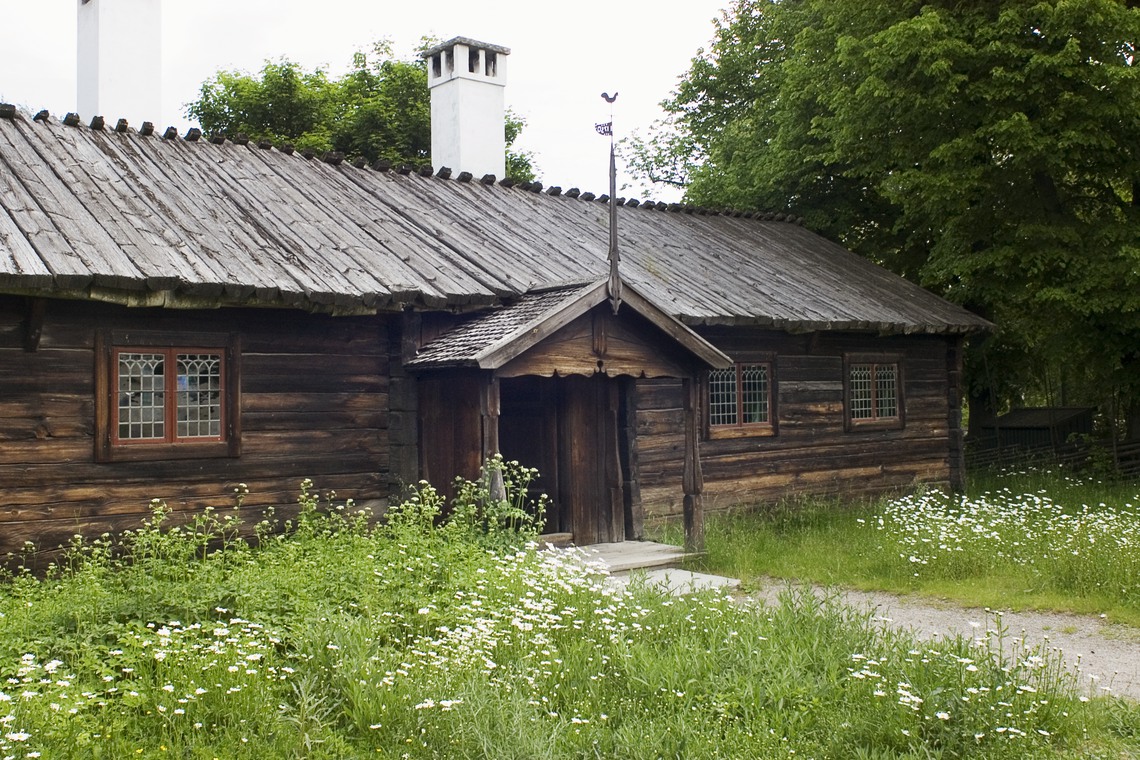
Bollnäs Cottage was built for special occasions – a place where important moments in life were marked and shared, such as weddings, christenings, funerals and Christmas celebrations. When the building was moved to Skansen in 1892 it continued to be used for festivities, especially during the spring festivals arranged by Skansen's founder, Artur Hazelius.

  • Facts
    Original location:

    Herte village, Bollnäs parish, Hälsingland

    Built:

    Around 1750

    Rebuilt at Skansen:

    1892

    Construction:

    One-storey log cottage, a traditional Swedish house type with two main rooms on either side of an entrance hall

  • Building a separate house for festive occasions was not common everywhere in Sweden, but in Hälsingland it was part of the local building tradition. Today, Bollnäs Cottage stands on its own, but it was originally part of Knubbens Farm in Herte village.

    Bollnäs Cottage has two large rooms on either side of the entrance hall. One was the everyday room, while the other was the room for special occasions. Weddings and christenings were celebrated here, and the room was also used for funerals, Christmas celebrations and the parish household interviews (husförhör), when the local priest examined people’s knowledge of the Christian faith.

    The everyday room was sometimes used for teaching, as the area had no permanent school. Instead, schoolteachers moved between farms. The house also has a chamber used as a bedroom for overnight guests, and a smaller chamber for handling food.

    Richly painted interiors

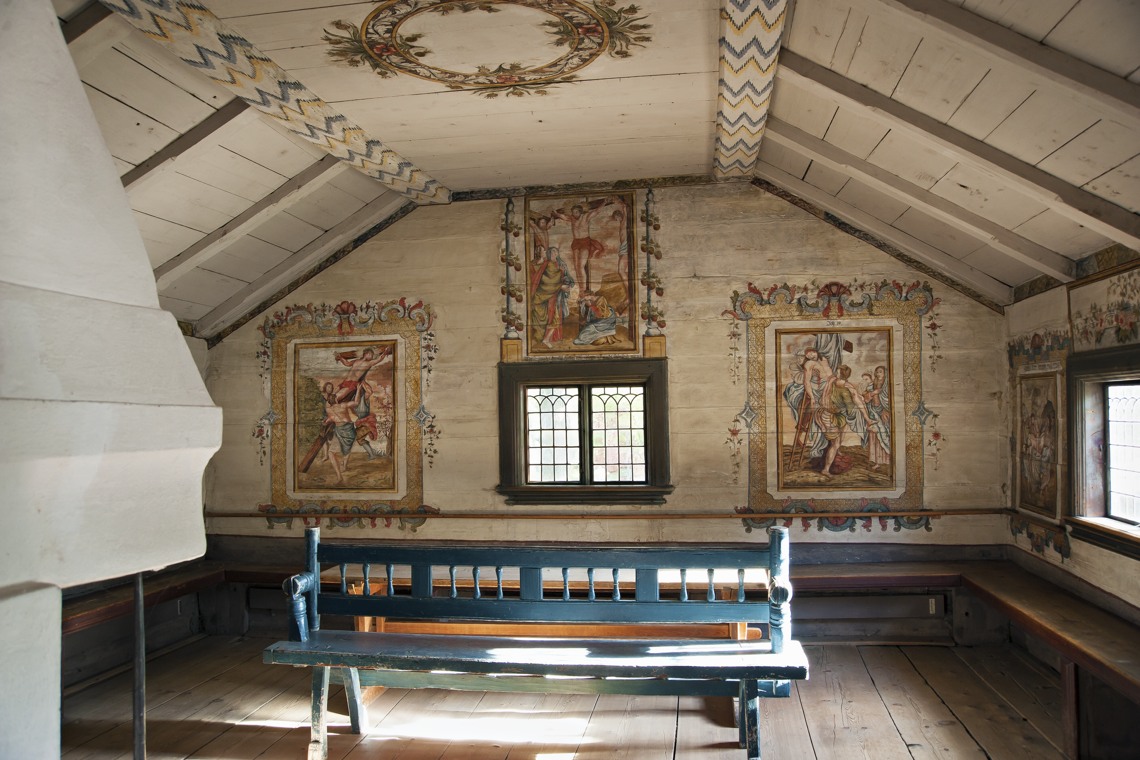
    Hälsingland cottages like this were often richly decorated, and Bollnäs Cottage is a fine example. The interior was painted in 1786 by the folk artist Jonas Hertman.

    Such paintings were often made on linen canvas, but here they are painted directly onto the logs using distemper paint. The paintings in the room for special occasions show the Passion of Christ. In the everyday room, the paintings show landscape scenes and the wall panels are decorated to resemble wallpaper.

    Jonas Hertman was one of the most important painters in Hälsingland in the late 1700s. His brother Erik is also mentioned as a painter in church records. Oral tradition says that Jonas’ wife, Lisa Jonsdotter, and probably their children, helped with the work.

    Folk artists painted walls, ceilings and sometimes furniture. They found inspiration in the surrounding landscape of deep valleys and mountains, but also in printed images, church paintings and interiors of wealthy homes. The paintings in Bollnäs Cottage are the only complete surviving interior by Jonas Hertman.

  • NMA.0036491

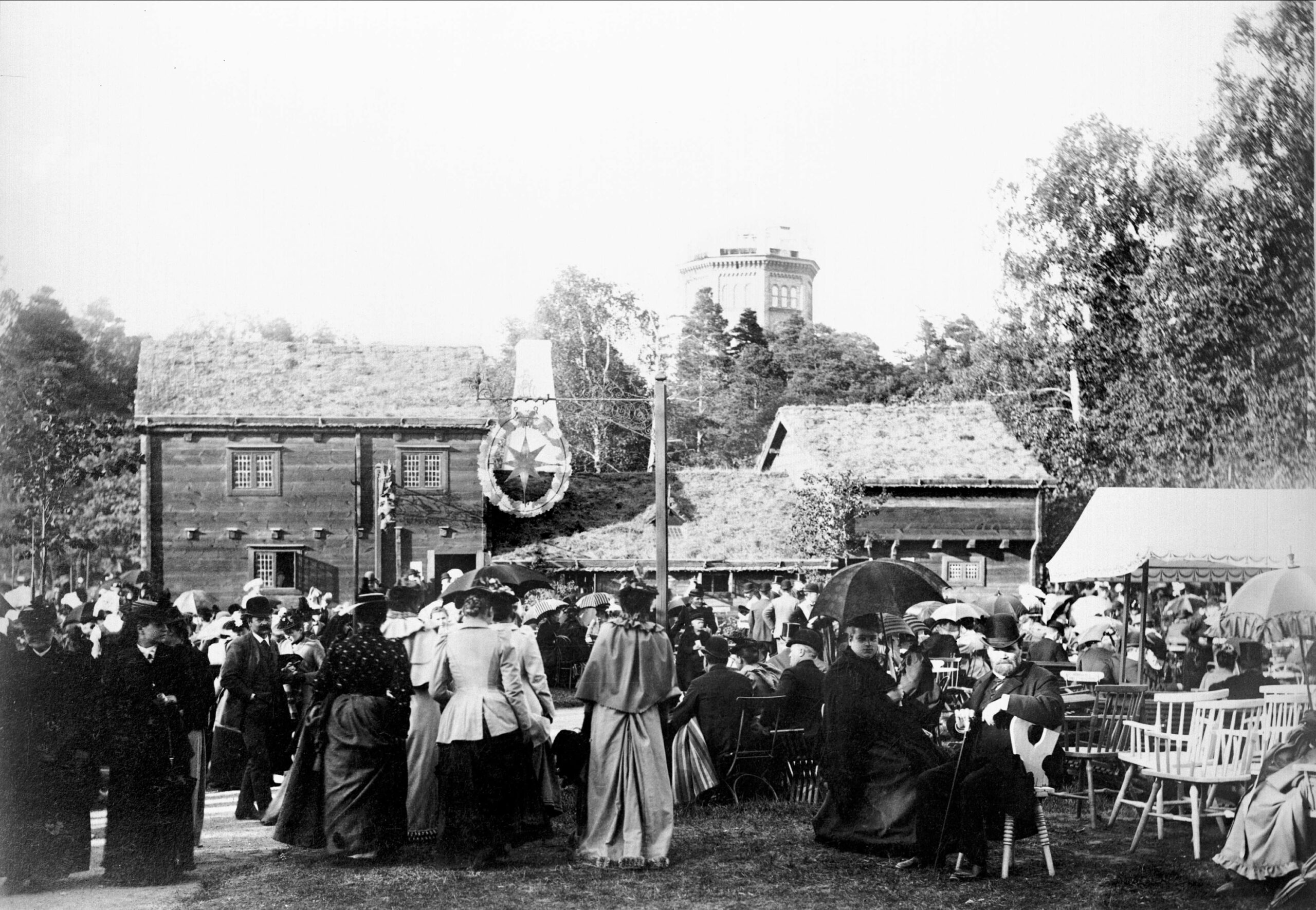
    Skansen's first spring festival in 1893

  • A part of early Skansen history

    In 1893, Artur Hazelius began arranging Skansen’s spring festivals that were large public events with food, drink and entertainment. Special market stalls were built and several of the historic buildings were used during the festivities.

    Bollnäs Cottage was presented as an inn, with horse-drawn rides starting from the house. Historical processions gathered on the steps outside. From inside the building, Hazelius watched the festivities and sent notes to his colleagues with ideas and things that needed to be arranged.

    Over the years, Bollnäs Cottage has been used for many different activities, including candle-making, storytelling, weaving, music and Lucia celebrations. In 1924, Skansen’s first cultural-historical Christmas table was presented here, inspired by traditions from Bjuråker in Hälsingland. Today, a similar Christmas table is presented at Delsbo Farmstead.

  • The move to Skansen

    Bollnäs Cottage was bought in 1892, the year after Skansen was founded. When Hazelius and his colleagues searched for buildings for Skansen, they looked for houses that seemed old-fashioned and representative for their origins.

    Sometimes buildings were adjusted to make them look even older. Bollnäs Cottage, for example, was given new chimneys based on old models, and its porch was moved from another building on the original farm. The decorated entrance porch is typical of the farmhouses of Hälsingland. In 2012, seven Hälsingland farmhouses, known for their richly decorated interiors, were added to the UNESCO World Heritage List.

    At Skansen, Bollnäs Cottage was first placed east of Bollnäs Square. In 1979, it was moved to its current location west of the square, closer to other buildings from Hälsingland.

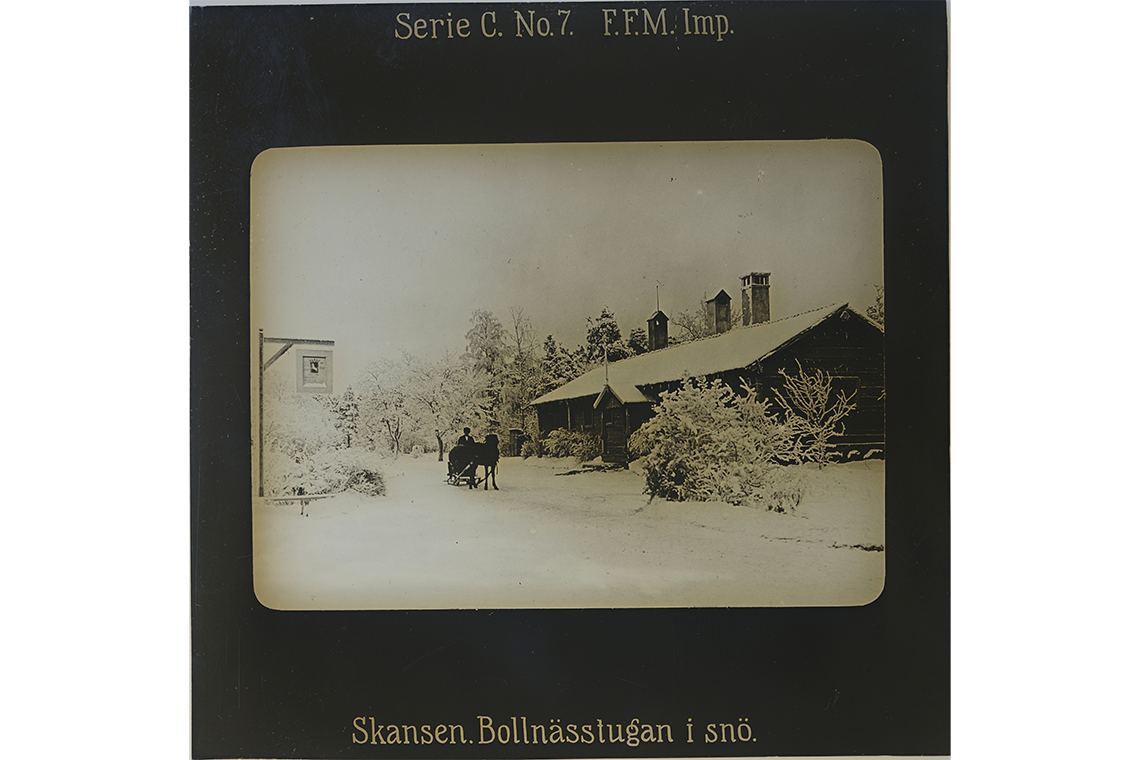
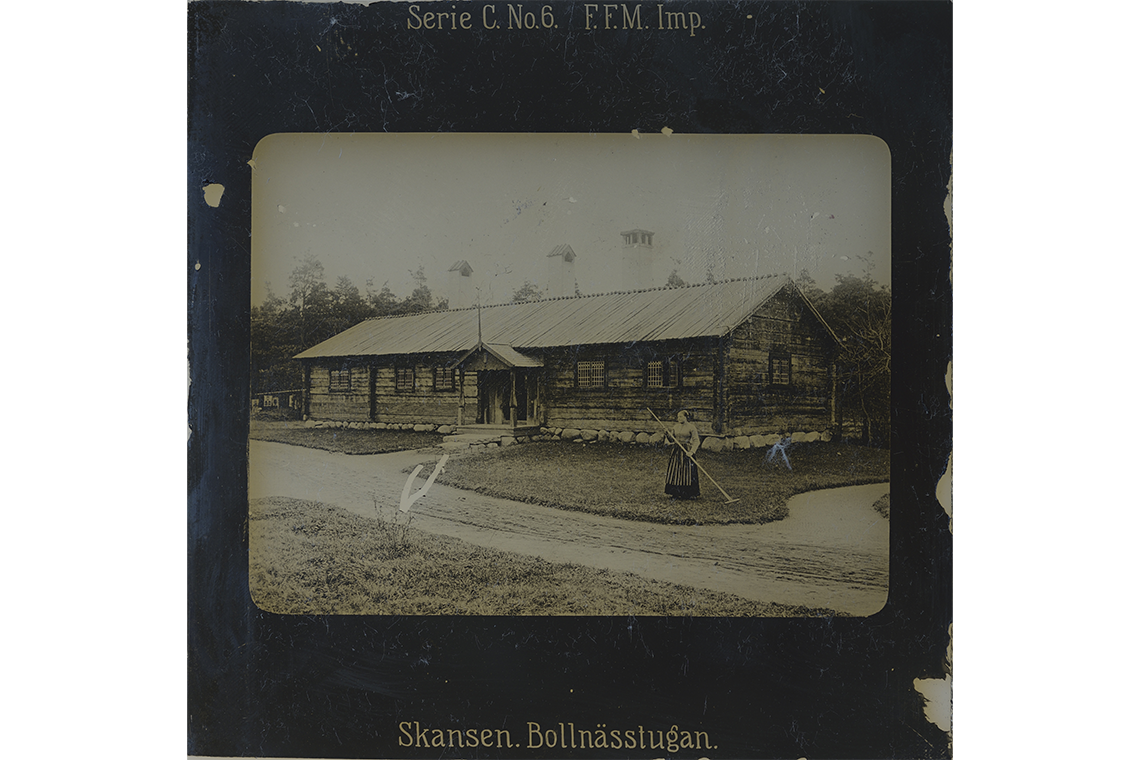
Magic lantern slide of Bollnäs Cottage, part of a series from 1891–1900

Magic lantern slide of Bollnäs Cottage, part of a series from 1891–1900

Inga kalendertillfällen är registrerade just nu.