We use cookies to improve, measure and analyze the use of the website as well as for visitor statistics and marketing.

The Älvros Farmstead

Explore a Härjedalen farmstead from the 1830s. The family who lived on the Älvros Farmstead were self-sufficient and produced almost everything they needed themselves.

  • About the Älvros Farmstead
    Original location:

    Älvros parish, Härjedalen

    Built:

    The main farmhouse dates from the 18th century, while the oldest storehouse dates from the late 15th century

    Erected at Skansen:

    1915-1916

    About the building:

    A collection of timber buildings that are unpainted. Roofs of split logs with a base layer of birch bark.

  • The Älvros farmstead is made up of several buildings that all have different functions. The farmstead includes a farmhouse for the family, buildings for the animals, several storehouses and a bakehouse. In the early 19th century, Sweden was a farming society and most people lived in the countryside. Life at the Älvros Farmstead was characterised by self-sufficiency, and the family produced what they needed for day-to-day life themselves: food, clothing, utensils and tools. Anything that could not be produced on the farm, such as salt, coffee and fine fabrics, would be obtained by bartering or purchased at the market.

    The main building, also known as the farmhouse, depicts life in the 1830s when Anders Hindriksson and Kerstin Zachrisdotter lived on the farm with their family.

  • Visit an authentic heritage building! 

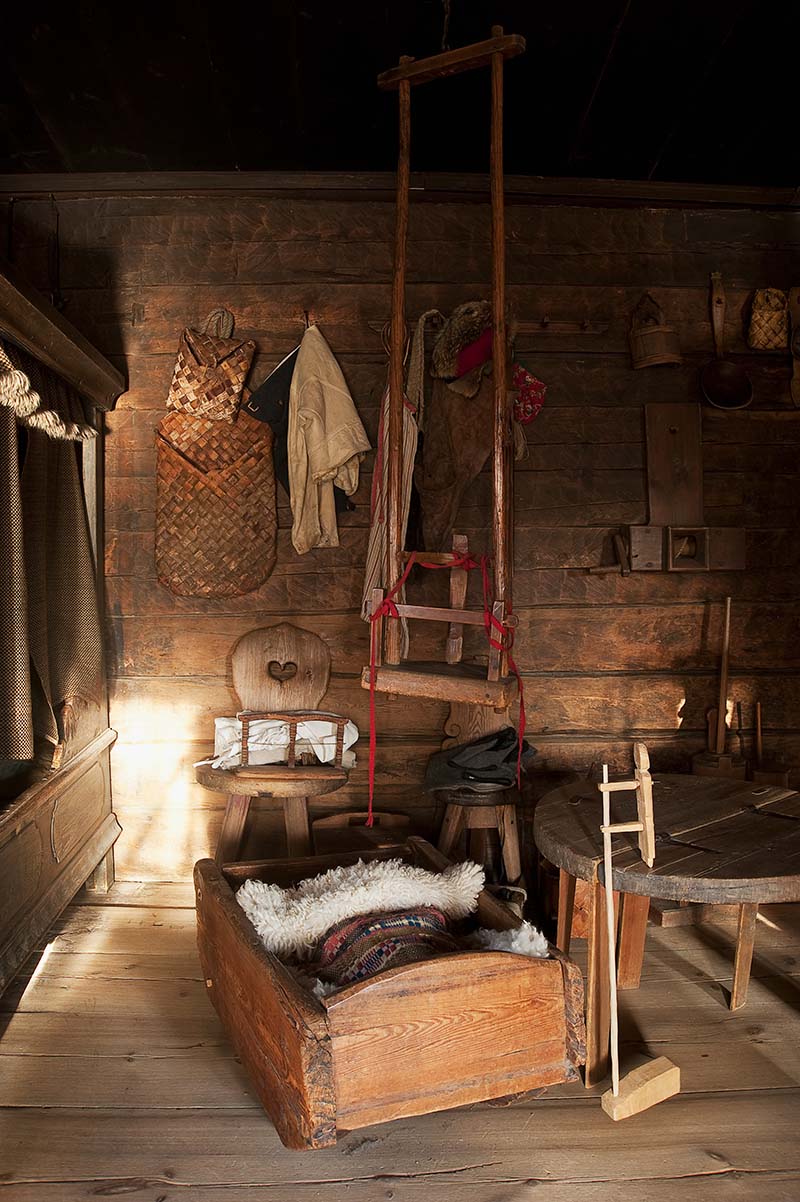
    Meet characters from the past who will tell you about life on the farm. A cosy fire burns in the main room of the farmhouse, as this was essential for warmth, light and cooking. Take a close look around the interior, almost all the objects are made of wood!

  • Livestock breeding, summer pasture farms and a seasonal way of life

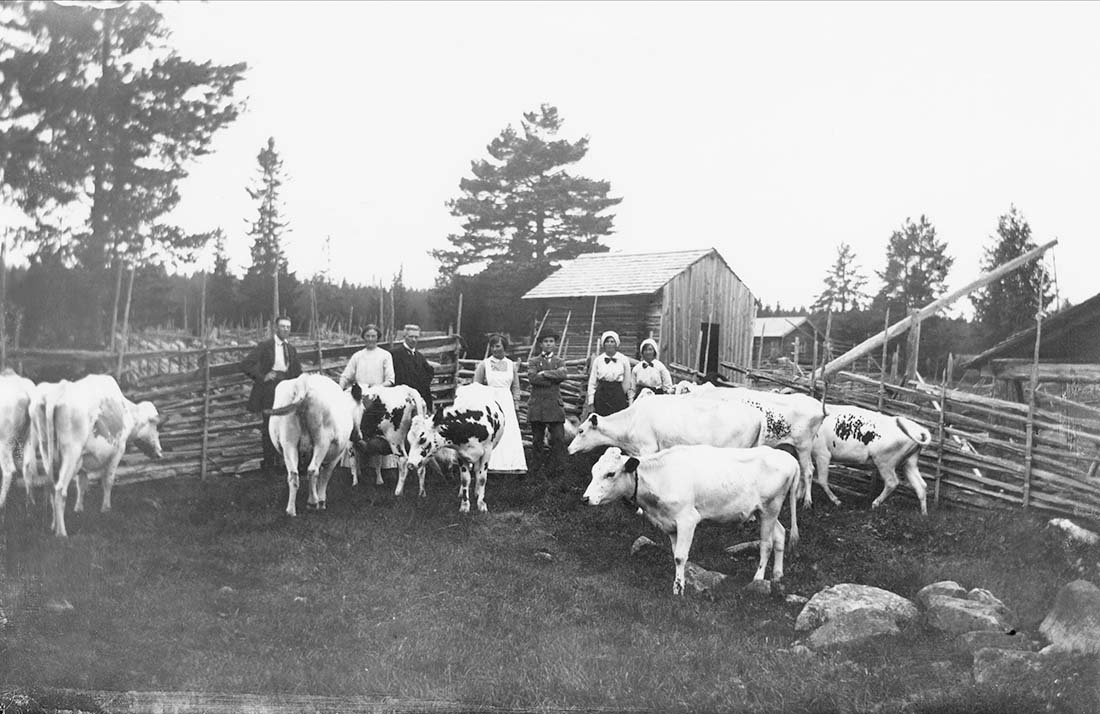
    Livestock breeding was the most important occupation in Älvros parish. In summer, cows and goats were moved to summer pastures (LINK to the Summer Pasture Farm) where they could graze. Young women were employed to tend the animals, protect them from predators and produce butter and cheese from their milk.

  • Bolbergets summer pasture farm, photo George Renström/Nordiska museet

    Summer pasture farm at Bolberget, photo George Renström/Nordiska museet

  • Livestock breeding, summer pasture farms and a seasonal way of life

    Livestock breeding was the most important occupation in Älvros parish. In summer, cows and goats were moved to summer pastures (LINK to the Summer Pasture Farm) where they could graze.

    Young women were employed to tend the animals, protect them from predators and produce butter and cheese from their milk.

    The mountain pastures served an important role for farms. In forested parts of the country where summer pasture farms were used, the pastures were commonly smaller. In order for livestock to survive the winter, the grass harvested around the farm needed to be saved, and it was also necessary for the animals to be fattened up over the summer. They managed this by having the animals spend the summer on summer pasture farms, away from the village.


  • The Älvros Farmstead at Skansen, photo Marie Andersson

    The Älvros Farmstead at Skansen, photo Marie Andersson

  • The summer months on the farm brought long working days out of doors. In winter, the residents of the farm would gather in the main room of the farmhouse, which was used for cooking, work and sleeping. In winter, when the days were short, the fire in the main room provided light and warmth. Opposite the main room was the second room in the house, helgdagsstuga, a ‘best room’ which was only used for special occasions, such as Christmas and weddings.

    National Romanticism, ‘freemen’, and relocation to Skansen

    In the late 19th century, National Romanticism was flourishing and the province of Härjedalen was seen as a symbol of the freeman (den fria bonden). For this reason, Skansen’s founder Artur Hazelius wanted to bring a farmstead from Härjedalen to Skansen. In 1895, he was told about this farmhouse from Älvros parish. The Älvros Farmstead was owned at that time by forestry company Bergvik Ala, which was planning to tear it down and build a barn using the timber. Instead it was donated to Skansen, and in 1915-1916 the Älvros Farmstead was reconstructed here.

    Buildings from the 15th century onward

    The Älvros Farmstead is made up of a number of older buildings that show a variety of log construction techniques, with differing corner joints. The roofs are covered with timber, a type of roof known as vedtak. The farmhouse at the Älvros Farmstead is what’s known as a parstuga, with two large rooms interconnected by a smaller room. The loft storehouse (loftbod), which is believed to date from 1666, is a two-storey building. The bottom floor was used for storing food and tools, while the upper floor provided sleeping accommodation for any young adults on the farm. The farm’s most precious possessions, such as grain, next year’s seeds and leather and other products that could be sold, were kept in a smaller storehouse up on pillars (härbre). As a safeguard against fire, this was sited slightly away from the other buildings. The timbers of the härbre here have been dated to 1477-1478 by means of dendrochronological analysis.

Day Time
Today, 31 January 2026 10.00-16.00
1 February 2026 10.00-16.00
2 February 2026 10.00-15.00
3 February 2026 10.00-15.00
4 February 2026 10.00-15.00
5 February 2026 10.00-15.00
6 February 2026 10.00-15.00
7 February 2026 10.00-16.00
8 February 2026 10.00-16.00
9 February 2026 10.00-15.00
10 February 2026 10.00-15.00
11 February 2026 10.00-15.00
12 February 2026 10.00-15.00
13 February 2026 10.00-15.00
14 February 2026 10.00-16.00
15 February 2026 10.00-16.00
16 February 2026 10.00-15.00
17 February 2026 10.00-15.00
18 February 2026 10.00-15.00
19 February 2026 10.00-15.00
20 February 2026 10.00-15.00
21 February 2026 10.00-16.00
22 February 2026 10.00-16.00
23 February 2026 19.15-16.00
24 February 2026 19.15-16.00
25 February 2026 19.15-16.00
26 February 2026 19.15-16.00
27 February 2026 19.15-16.00
28 February 2026 10.00-16.00
1 March 2026 10.00-16.00
2 March 2026 10.00-15.00
3 March 2026 10.00-15.00
4 March 2026 10.00-15.00
5 March 2026 10.00-15.00
6 March 2026 10.00-15.00
7 March 2026 10.00-16.00
8 March 2026 10.00-16.00
9 March 2026 10.00-15.00
10 March 2026 10.00-15.00
11 March 2026 10.00-15.00
12 March 2026 10.00-15.00
13 March 2026 10.00-15.00
14 March 2026 10.00-16.00
15 March 2026 10.00-16.00
16 March 2026 10.00-15.00
17 March 2026 10.00-15.00
18 March 2026 10.00-15.00
19 March 2026 10.00-15.00
20 March 2026 10.00-15.00
21 March 2026 10.00-16.00
22 March 2026 10.00-16.00
23 March 2026 10.00-15.00
24 March 2026 10.00-15.00
25 March 2026 10.00-15.00
26 March 2026 10.00-15.00
27 March 2026 10.00-15.00
28 March 2026 10.00-16.00
29 March 2026 10.00-16.00
30 March 2026 10.00-15.00
31 March 2026 10.00-15.00
1 April 2026 10.00-15.00
2 April 2026 10.00-15.00
3 April 2026 10.00-15.00
4 April 2026 10.00-16.00
5 April 2026 10.00-16.00
6 April 2026 10.00-15.00
7 April 2026 10.00-15.00
8 April 2026 10.00-15.00
9 April 2026 10.00-15.00
10 April 2026 10.00-15.00
11 April 2026 10.00-16.00
12 April 2026 10.00-16.00
13 April 2026 10.00-15.00
14 April 2026 10.00-15.00
15 April 2026 10.00-15.00
16 April 2026 10.00-15.00
17 April 2026 10.00-15.00
18 April 2026 10.00-16.00
19 April 2026 10.00-16.00
20 April 2026 10.00-15.00
21 April 2026 10.00-15.00
22 April 2026 10.00-15.00
23 April 2026 10.00-15.00
24 April 2026 10.00-15.00
25 April 2026 10.00-16.00
26 April 2026 10.00-16.00
27 April 2026 10.00-15.00
28 April 2026 10.00-15.00
29 April 2026 10.00-15.00
30 April 2026 10.00-15.00
17 August 2026 10.00-17.00
18 August 2026 10.00-17.00
19 August 2026 10.00-17.00
20 August 2026 10.00-17.00
21 August 2026 10.00-17.00
22 August 2026 10.00-17.00
23 August 2026 10.00-17.00
24 August 2026 10.00-17.00
25 August 2026 10.00-17.00
26 August 2026 10.00-17.00
27 August 2026 10.00-17.00
28 August 2026 10.00-17.00
29 August 2026 10.00-17.00
30 August 2026 10.00-17.00
31 August 2026 10.00-17.00
1 September 2026 10.00-17.00
2 September 2026 10.00-17.00
3 September 2026 10.00-17.00
4 September 2026 10.00-17.00
5 September 2026 10.00-17.00
6 September 2026 10.00-17.00
7 September 2026 10.00-17.00
8 September 2026 10.00-17.00
9 September 2026 10.00-17.00
10 September 2026 10.00-17.00
11 September 2026 10.00-17.00
12 September 2026 10.00-17.00
13 September 2026 10.00-17.00
14 September 2026 10.00-17.00
15 September 2026 10.00-17.00
16 September 2026 10.00-17.00
17 September 2026 10.00-17.00
18 September 2026 10.00-17.00
19 September 2026 10.00-17.00
20 September 2026 10.00-17.00
21 September 2026 10.00-17.00
22 September 2026 10.00-17.00
23 September 2026 10.00-17.00
24 September 2026 10.00-17.00
25 September 2026 10.00-17.00
26 September 2026 10.00-17.00
27 September 2026 10.00-17.00
28 September 2026 10.00-15.00
29 September 2026 10.00-15.00
30 September 2026 10.00-15.00
1 October 2026 10.00-15.00
2 October 2026 10.00-15.00
3 October 2026 10.00-16.00
4 October 2026 10.00-16.00
5 October 2026 10.00-15.00
6 October 2026 10.00-15.00
7 October 2026 10.00-15.00
8 October 2026 10.00-15.00
9 October 2026 10.00-15.00
10 October 2026 10.00-16.00
11 October 2026 10.00-16.00
12 October 2026 10.00-15.00
13 October 2026 10.00-15.00
14 October 2026 10.00-15.00
15 October 2026 10.00-15.00
16 October 2026 10.00-15.00
17 October 2026 10.00-16.00
18 October 2026 10.00-16.00
19 October 2026 10.00-15.00
20 October 2026 10.00-15.00
21 October 2026 10.00-15.00
22 October 2026 10.00-15.00
23 October 2026 10.00-15.00
24 October 2026 10.00-16.00
25 October 2026 10.00-16.00
26 October 2026 10.00-15.00
27 October 2026 10.00-15.00
28 October 2026 10.00-15.00
29 October 2026 10.00-15.00
30 October 2026 10.00-15.00
31 October 2026 10.00-16.00
1 November 2026 10.00-16.00
2 November 2026 10.00-15.00
3 November 2026 10.00-15.00
4 November 2026 10.00-15.00
5 November 2026 10.00-15.00
6 November 2026 10.00-15.00
7 November 2026 10.00-16.00
8 November 2026 10.00-16.00
9 November 2026 10.00-15.00
10 November 2026 10.00-15.00
11 November 2026 10.00-15.00
12 November 2026 10.00-15.00
13 November 2026 10.00-15.00
14 November 2026 10.00-16.00
15 November 2026 10.00-16.00
16 November 2026 10.00-15.00
17 November 2026 10.00-15.00
18 November 2026 10.00-15.00
19 November 2026 10.00-15.00
20 November 2026 10.00-15.00
21 November 2026 10.00-16.00
22 November 2026 10.00-16.00
23 November 2026 10.00-15.00
24 November 2026 10.00-15.00
25 November 2026 10.00-15.00
26 November 2026 10.00-15.00
Show more