- See and do
- The Zoo
- Animals at Skansen
- Guereza
Guereza
The guereza is skilled at climbing trees, and can jump ten metres from one tree to another. The eastern black-and-white guerezas at Skansen live in groups of six to ten.
-
Born with white fur
The black-and-white guereza lives in Central Africa. Its young are born with white fur. As they grow older and bigger, their body hair darkens and long white hairs start to grow around the face, on both sides of the back and on the tail.
Each group includes several related females, their offspring and an adult male. The oldest females usually take charge of activities such as looking for food, travelling, grooming and resting. They are skilled at climbing trees, and can jump ten metres from one tree to another.
-
About the guereza
Scientific name:Colobus guereza
Order:Primates
Family:Cercopithecidae
Weight:8 kg for females and up to 14 kg for males
Sexual maturity:1 year
Breeding season:All year round
Gestation:158 days
Number of young:1
Lifespan:Up to 30 years
Eats:Leaves
Distribution:East Africa
-
With its beautiful black and white fur and its long tail, the guereza was once a sought-after game animal and was hunted ruthlessly. It is now protected.
Ruminants
The guereza’s diet consists mostly of leaves, as well as fruit. Since leaves have few nutrients, it needs to eat large amounts of leaves and other plants every day to ensure sufficient nutrition. Leaves contain cellulose which is not readily digested, and the guereza has therefore developed a specialised digestive system. It is a ruminant, which means that its stomach is divided into two sections.
Reproduction
The female reaches sexual maturity two years earlier than the male. She shows that she is ready to mate by smacking her tongue and showing her buttocks to the male. Around six months after mating, she gives birth to an infant that weighs about 400 grams. The baby is cared for not only by its mother, but also by other females.
Lives in the treetops
Guerezas mainly live in the treetops, but can occasionally be seen foraging on the ground. An area of one square kilometre can be shared by 100–500 monkeys. They are divided up into different family groups, with overlapping home ranges. Family ties are strengthened by mutual grooming. In order to keep its ‘neighbours’ at bay, the adult male roars loudly at dawn and dusk.
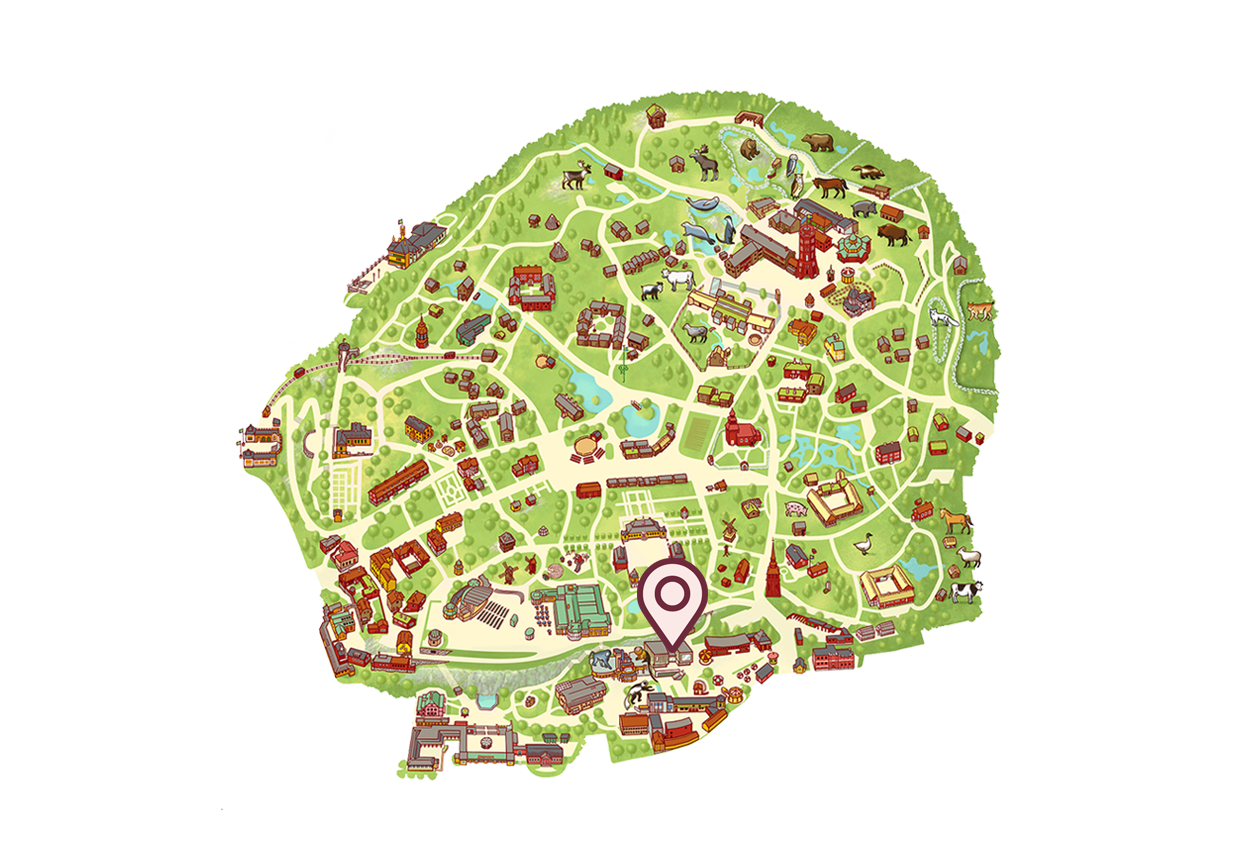
You can find the guereza here