We use cookies to improve, measure and analyze the use of the website as well as for visitor statistics and marketing.

Missonshuset – a Free church chapel

The Mission Covenant Church was established in 1978 as part of the revivalist movement, in connection with society’s increasingly free view of religion. At our Missionshuset, a wooden chapel, you can experience everyday life and celebrations in a small parish in the 1910s.

  • Facts about Missionshuset
    Origin:

    Svenshult, Godegård Parish, Östergötland

    Built:

    1898

    Erected at Skansen:

    1978

    About the building:

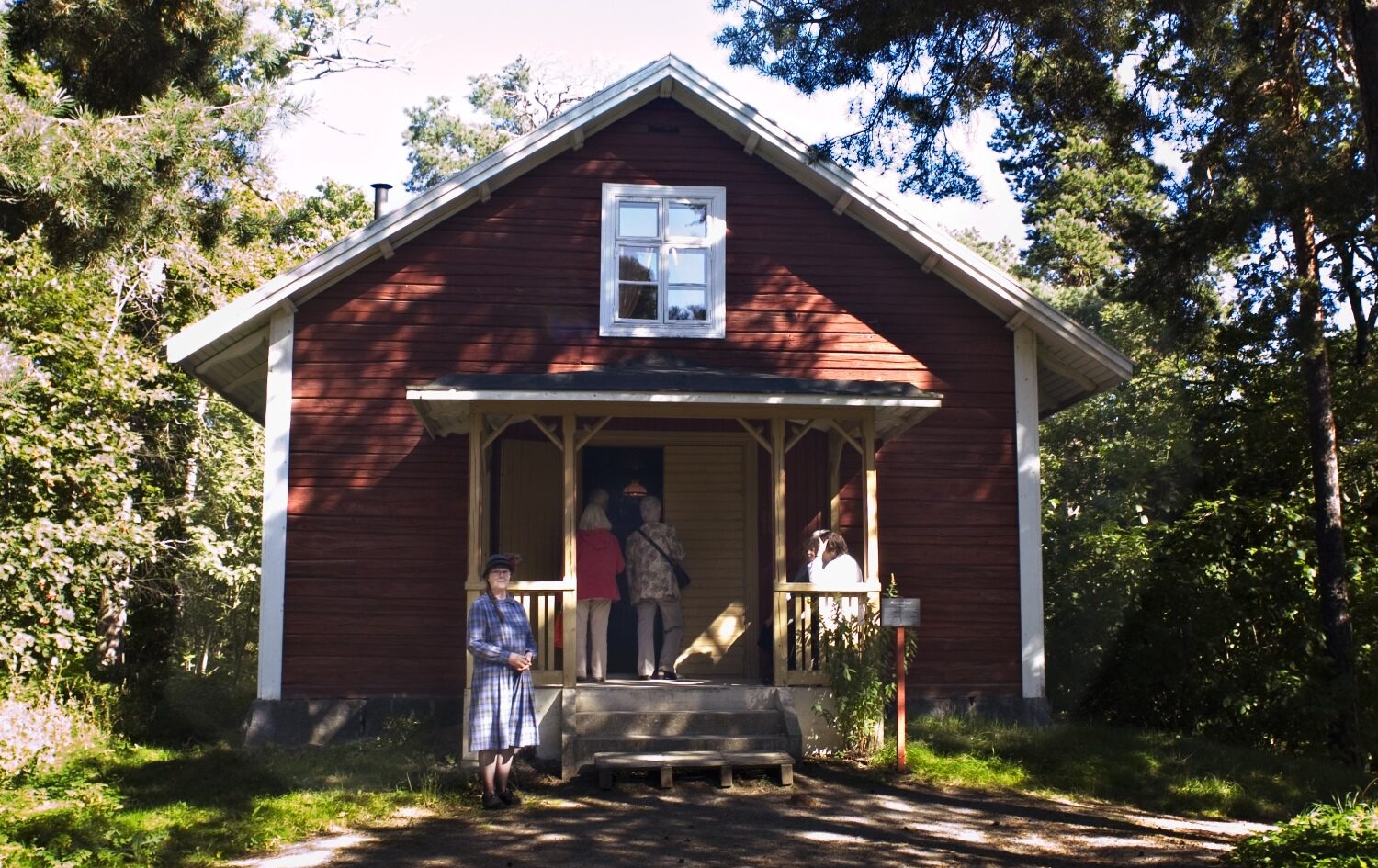
    A red-stained timbered building with a shingle-covered gable roof.

  • The Missionshuset, chapel was built in a forest clearing in Svenshult towards the end of the 19th century. The members of the small congregation had come together to build a house of worship. Land and timber were donated, but they also had to take out a loan to finance the construction.

    Building work began in April 1898, and the building was completed in December. The chapel was built to accommodate 75 people, but the congregation had no more than 30 members, mostly crofters.


    The growth of popular movements and free churches

    The 19th century saw dramatic changes in Sweden, as the population grew and industrialisation gathered pace. People began to move from the countryside to the cities, as well as abroad. Many people who emigrated were poor, but others moved so that they could practise their religion freely.

    The Conventicle Act – the 1726 decree that prohibited prayer meetings in places other than churches – was repealed in 1858, and it was only then that people were permitted to gather for religious meetings outside the The Swedish State Church. From 1860 onwards, people were allowed to leave the state church if they joined another Christian community. However, it was not until 1951 that Sweden gained freedom of religion.

    The need for new forms of community stemmed from the fact that individual farms and the church had been the obvious places for kinship. From this, and from a desire to create democratic organisations, popular movements such as the workers’ movement, the temperance movement and the revivalist movement emerged.

    The Missionary Covenant Church was established in 1878, and was part of the revivalist movement that formed its own free churches. The focus in this movement was on one’s own revival and personal faith. The emergence of free churches can be said to reflect people’s desire to read, interpret and practise their Christian faith more freely. Social work was another important aspect of free church communities, and there was also a strong conviction about the importance of missionary work and spreading the Christian faith.

  • Get up close at Skansen!

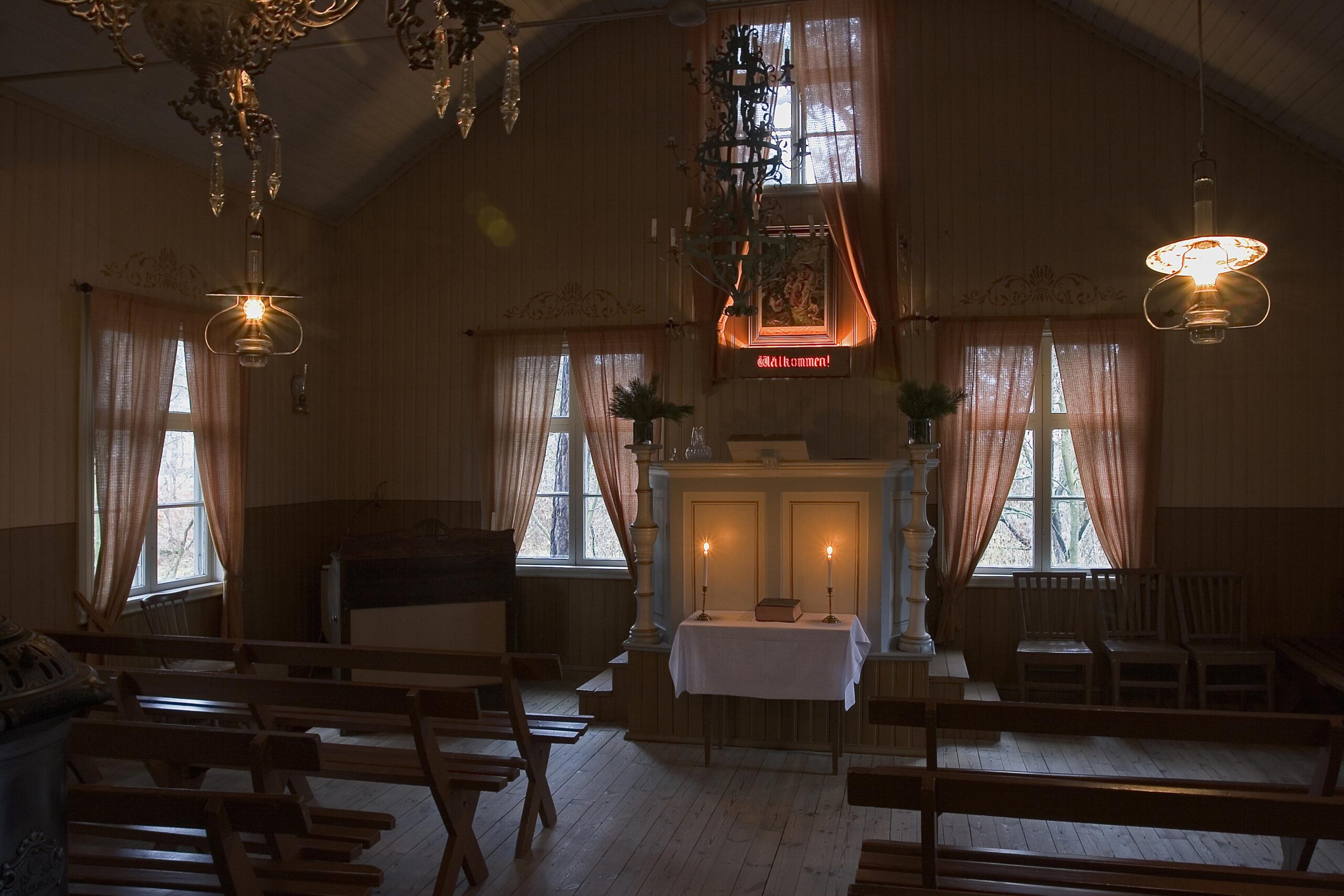
    Step into the Missionshuset, chapel as it appeared in 1914. Here, you can explore the beautiful room and find out more about the mission church and the growth of the free churches. Choirs will sing carols here during the Christmas market weekends.

  • Missionshuset, int_JS

    Interior from Missionshuset

  • Services, Sunday school and annual celebrations

    The Missionary Covenant Church congregation in Svenshult was a small community that could not afford its own preacher. They came together every Sunday morning at 11 o’clock, and an invited a lay preacher or a member of the congregation read passages from the Bible. Prayers and hymns were important parts of the service. Holy Communion was held one Sunday a month, and a communion table would be set up with a white cloth and a silver-plated chalice. Instead of wine, ‘good Swedish juice’ was used for several years because communion wine was often hard to obtain.

    The congregation also had a Sunday school where the children were taught the Christian faith. Parties were thrown for the Sunday school children twice a year, and at the Christmas party they talked about the baby in the manger – God’s great gift at Christmas time. The children were given gingerbread biscuits, large wheat pretzels and bags of sweets to take home. The congregation also had a sewing group that met in each other’s homes to read the Bible, sew, knit and drink coffee. Their work was sold at auctions, providing a welcome contribution to the parish’s funds.

    Painted little by little

    The ground floor is a timbered log building. When the building was opened in 1898, the congregation could not afford to paint the outside or the inside. It was not until 1912 that the members painted their house of worship with red with red wood stain, the edge trim and the window frames being painted white.

    A year later, work began on painting the interior. This was completed in April 1914. The building has a large room with a gallery and a small kitchen. The hall is furnished with benches, a podium with a lectern, a pump organ and a stove.

    A house of worship in Svenshult

    Inside the Missionshuset, the chapel, there was also a small chamber measuring barely four square meters where Lovisa Jakobsson lived with her paralysed husband. Lovisa was a member of the congregation who helped out at church services and other gatherings. She lit the stove to keep the hall warm, and she baked and made coffee. Lovisa also helped on the farms with harvesting, slaughtering and laundry. The small room became her home until the 1930s, when she died after a short illness. The congregation held a special service in her memory.

    Labourer Theodore Engholm was a driving force behind setting up the Missionshuset and was the congregation’s secretary. It was thanks to his meticulous notes that information about the congregation’s activities has been preserved.

    How the Mission House came to Skansen

    The idea of moving a free church chapel to Skansen was first raised in the 1950s. A mission house could both tell the story of a popular movement and provide a counterpoint to Seglora Church. The issue was raised again in 1976, and several possible mission houses were discussed. Svenshult’s congregation had come to an end in 1948 after a sharp decline in membership. Skansen received the Missionshuset as a gift in April 1978, and the building could then be moved to its new location.

  • Accessibility

    Access to the chapel is limited due to steps at the entrance.

Day Time
4 April 2026 10.00-16.00
11 April 2026 10.00-16.00
18 April 2026 10.00-16.00
25 April 2026 10.00-16.00
Show more